
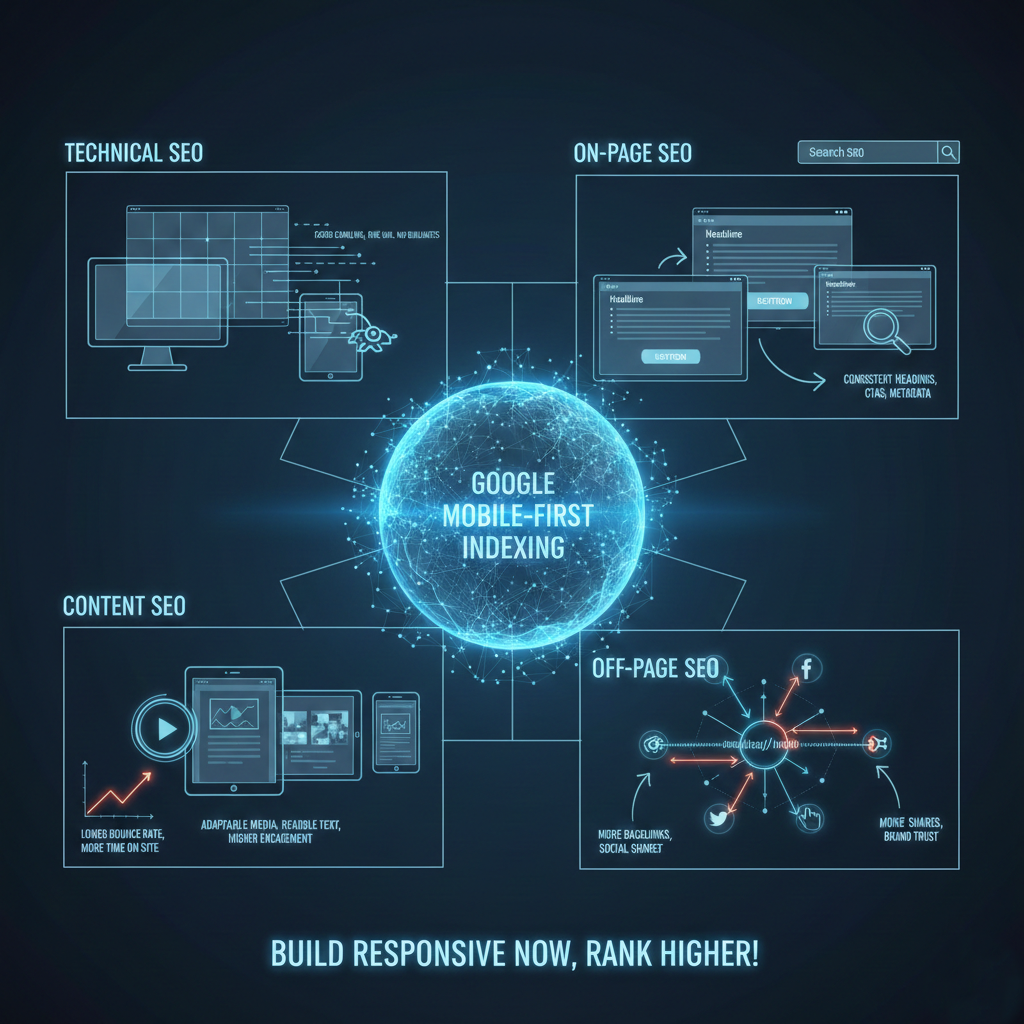
Responsive web design is good for SEO because it provides a seamless experience across all devices, improving user engagement, page speed, and mobile-friendliness. It aligns with Google’s mobile-first indexing, helping boost search rankings and reduce issues like duplicate content.
A key aspect of responsive design is that it ensures a consistent user experience on desktops, tablets, and smartphones. Google now prioritizes mobile-friendly sites in search results due to mobile-first indexing. This means that if your site isn’t optimized for mobile users, your SEO rankings could suffer.
Another reason responsive design helps SEO is that it uses a single URL for all devices, making it easier for search engines to crawl and index your site. This eliminates duplicate content problems that often occur with separate desktop and mobile versions of a site.
How Does a Single URL Architecture Benefit Indexing?
A single URL architecture benefits indexing by providing a clear, logical, and streamlined structure that reduces crawl depth, prevents duplicate content issues, and helps search engines efficiently understand a site’s hierarchy and relevance, boosting search visibility.
A single, clean URL structure reduces the complexity of crawling. When search engine bots navigate your site, they need to follow clear paths. By maintaining a consistent and logical URL structure, you make it easier for search engines to discover, crawl, and index content more efficiently. This not only improves indexing but also enhances search visibility and page ranking.
Why Does Responsive Web Design Improve User Experience Metrics?
Responsive web design improves user experience (UX) metrics by offering a seamless, fast-loading, and consistent experience across all devices. This adaptability eliminates frustrating zooming, panning, or scrolling, reducing bounce rates and increasing time on site and conversions.
A major benefit of responsive design is its speed. By ensuring that a website adapts to any device, users don’t need to wait for content to adjust, which boosts engagement. Faster load times also play a significant role in lowering bounce rates. When pages load quickly, users are more likely to stay and explore, improving overall site performance.
Another important factor is accessibility. With responsive design, the content and navigation adjust automatically to fit the screen size of the device, making it easier for users to access information without unnecessary effort. Whether a user is on a smartphone, tablet, or desktop, they experience a smooth, intuitive interface, which contributes to higher user satisfaction.
How Does Mobile-First Indexing Prioritize Flexible Layouts?
Mobile-first indexing prioritizes flexible layouts by using the mobile version of a website as the primary source for crawling and ranking. It rewards responsive designs that adjust to various screen sizes, ensuring a consistent user experience across devices.
With mobile-first indexing, Google focuses on the mobile version of your website when it comes to crawling and ranking. This means that if your mobile layout isn’t optimized or is missing key content compared to the desktop version, it could negatively impact your search rankings.
Flexible, responsive layouts ensure that your content is displayed consistently across all devices. Mobile-first indexing favors sites that automatically adjust to screen sizes, ensuring users have the same experience whether they’re on a smartphone, tablet, or desktop. This consistency boosts the overall usability of the site and prevents penalties for poor mobile user experiences.
By prioritizing mobile-friendly designs, mobile-first indexing helps search engines determine how well your site performs for mobile users. Websites that embrace responsive web design can provide a smooth, intuitive experience, which Google values when ranking pages.
Why Do Responsive Frameworks Reduce Bounce Rates?
Responsive frameworks reduce bounce rates by automatically adjusting content to fit various screen sizes, offering a seamless, frustration-free experience. This prevents issues like zooming or horizontal scrolling and enhances load speeds, navigation, and mobile-friendly content, boosting engagement and retention.
When a website adapts seamlessly to different devices, users are less likely to leave due to frustration. For instance, on a mobile phone, if users don’t have to zoom in to read text or scroll sideways, they’re more likely to stay engaged with the content. This improved experience directly contributes to a decrease in bounce rates.
Responsive frameworks also speed up load times, which is a key factor in user retention. Slow-loading pages are one of the main reasons users leave a site quickly. By optimizing content and design for faster performance, responsive frameworks keep users on the site longer, increasing the chances of them exploring more pages.
How Does Loading Speed Correlation Impact Mobile Search Rankings?
Loading speed directly impacts mobile search rankings because Google’s mobile-first indexing prioritizes faster, well-optimized sites. Faster loading sites typically achieve higher visibility, while slow speeds (over 3 seconds) increase bounce rates, negatively affecting rankings due to poor user experience.
Google uses loading speed as a ranking factor, especially with mobile-first indexing. This means that the faster your site loads, the higher it can rank on search engine results pages (SERPs). Since mobile users are more likely to abandon slow-loading sites, Google adjusts rankings based on how well a site performs on mobile devices.
When a site takes longer than three seconds to load, 53% of users are likely to leave. High bounce rates from slow-loading pages signal to search engines that the site offers a poor user experience. As a result, search algorithms may rank the site lower in mobile search results, reducing its visibility.
Why Is Mobile Responsiveness Crucial for SEO?
Mobile responsiveness is crucial for SEO because Google’s mobile-first indexing prioritizes mobile versions of websites for ranking and indexing. With the majority of global traffic coming from mobile devices, a responsive design improves user experience, boosts engagement, and enhances SEO rankings.
How Does Fluid Grid Navigation Enhance Site Crawlability?
Fluid grid navigation enhances site crawlability by using flexible, relative units (percentages) instead of fixed pixels, ensuring a consistent, accessible layout across all devices. This helps search engine bots efficiently crawl, index, and understand content, improving mobile indexing and user engagement.
The use of fluid grids ensures that a website adjusts seamlessly to different screen sizes, from desktop monitors to mobile devices. This flexibility allows search engine bots to crawl and index content more effectively, regardless of the device or viewport. As a result, search engines can better assess the structure and relevance of the content.
Why Does Content Consistency Across Devices Prevent Ranking Fluctuations?
Content consistency across devices prevents ranking fluctuations by maintaining trust, relevance, and a smooth user experience, reducing the impact of mobile-first indexing and mixed content signals. This consistency helps search engines assess the true value of a page, stabilizing rankings.
When content is inconsistent across devices, such as offering a robust desktop experience and a simplified mobile version, search engines may have difficulty determining the page’s true value. This can cause volatility in rankings, as the search engine algorithm may favor one device’s version over the other, or rank the page inconsistently due to confusion over its content quality.
How Do Touch-Friendly Elements Influence Conversion Signals?
Touch-friendly elements influence conversion signals by enhancing mobile user experience, reducing friction, and boosting confidence in taking actions. Features like large buttons, ample spacing, and gesture-based navigation are key to improving engagement, lowering bounce rates, and driving conversions.
When websites are optimized for touch, users can easily navigate, click, or tap on important elements, such as calls-to-action (CTAs), without frustration. This ease of use makes users more likely to complete desired actions, whether it’s making a purchase or filling out a form. By designing with touch in mind, you cater to mobile users, which is crucial since over 60% of web traffic now comes from mobile devices.
Ensuring touch-friendly design fosters a smoother, more intuitive experience, encouraging users to stay on your site longer and engage with its content. Smaller or poorly designed touch elements can cause users to abandon tasks, resulting in higher bounce rates and missed conversions. So, designing for touch isn’t just about aesthetics; it’s about making the user’s journey easier, which in turn, increases the likelihood of a conversion.
What Is a Key Benefit of Responsive Design for Content Management?
A key benefit of responsive design for content management is that it ensures content is accessible and properly displayed across various devices, providing a seamless user experience. This adaptability improves user engagement and optimizes content delivery.
Responsive design adapts content layout to different screen sizes, from desktop to mobile. This flexibility ensures that no matter what device the user is on, they will have a smooth and consistent experience. This means that content can be easily consumed, without users having to zoom in or scroll excessively. The ability to cater to multiple devices helps retain visitors and boosts engagement.
How Do Social Sharing Gains Consolidate Authority on One Link?
Social sharing gains consolidate authority on one link indirectly by increasing visibility of that content. Increased visibility leads to higher engagement, greater brand trust, and an increased likelihood of earning editorial backlinks.
Although social shares are not a direct ranking factor in Google’s algorithm, they act as a multiplier that amplifies reach of a single link. This amplification concentrates authority around that specific URL rather than dispersing it across multiple, low-performing ones.
In the basics of combining SEO and Social Media, posts containing external links run counter to that goal, reinforcing the focus on one link where authority is consolidated through social sharing gains.
Why Does Elimination of Duplicate Content Issues Streamline Authority?
Elimination of duplicate content issues streamlines authority because it consolidates ranking signals like backlinks, social signals, and topical relevance onto one single URL, helping search engines select a unique version instead of weakening authority across competing versions.
From an authority consolidation view, duplicate content issues spread ranking signals thin. When signals scatter across similar pages, authority weakens. Removing duplicates focuses trust, relevance, and value on one page, much like social sharing gains concentrating strength on one link.
From a search engine perspective, engines aim to show the most relevant, unique version. Competing versions force difficult choices, often lowering rankings for all pages. Elimination removes confusion and lets algorithms reward clarity and consistency.
How Does SEO Performance Benefit From Responsive Web Design?
SEO performance benefits from responsive web design because a single, flexible URL supports Google mobile-first indexing, improves search rankings, reduces bounce rates, preserves backlink authority, improves user experience, boosts loading speeds, and helps search engines crawl and index content efficiently.
From a mobile-first indexing view, responsive web design aligns one URL with all devices. Search engines reward this setup because it avoids duplicate content issues and concentrates authority on one page, much like consolidating strength on one strong link.
From a user experience angle, responsive layouts adapt cleanly across screens. Better loading speeds, readable content, and smoother navigation reduce bounce rates. When users stick around, SEO performance naturally improves.
Does Responsive Design Influence the Golden Rule of SEO?
Yes, responsive design directly influences the Golden Rule of SEO by improving user experience, search visibility, and rankings, as Google, through mobile-first indexing, rewards fast-loading, device-adaptive sites with lower bounce rates and clean URLs.
Responsive design supports the Golden Rule of SEO because search engines prioritize pages that satisfy users. When a site adapts smoothly across devices, users stay longer, interact more, and bounce less. That behavior signals relevance and quality to Google.
Responsive design also improves page load speed by avoiding duplicate mobile sites and heavy redirects. Faster pages help crawling, indexing, and ranking. A single SEO-friendly URL and consistent site structure further strengthen authority and simplify optimization.
Can Technical SEO Foundations Be Strengthened by Responsive Layouts?
Yes, responsive layouts strengthen technical SEO foundations by improving page speed, crawling, indexing, and consistent content delivery, while aligning with Google’s mobile-first indexing, which directly affects rankings and site performance.
Responsive layouts help search engines crawl one clean site instead of juggling multiple versions. That setup reduces errors, avoids duplicate content, and keeps signals clear. Google reads the site faster and trusts it more.
How Do the 4 Pillars of SEO Relate to Responsive Design?
Responsive design relates to the four pillars of SEO Technical, On-Page, Content, and Off-Page by improving user experience (UX), site speed, mobile-first indexing, and user engagement, which together influence rankings, authority, and search visibility.
Technical SEO benefits because responsive design creates one adaptable site that improves crawling, indexing, and page speed. Google’s mobile-first indexing favors clean code, consistent URLs, and fewer errors. That setup keeps technical signals strong and reliable.
On-Page SEO improves when responsive layouts keep titles, headings, internal links, and structured data consistent across devices. Users see the same optimized elements everywhere. Search engines read clearer relevance signals without confusion.
Content SEO gains strength because responsive design delivers the same high-quality content to every screen size. Text stays readable, media scales properly, and engagement rises. Better dwell time and lower bounce rates reinforce content value.
Off-Page SEO connects through user trust and sharing behavior. A mobile-friendly site earns more backlinks, mentions, and social shares. People link to pages that work smoothly anywhere.
Conclusion
Responsive web design improves SEO performance by supporting mobile-first indexing, improving page speed, reducing bounce rates, and consolidating authority on one URL. Responsive layouts strengthen technical SEO, enhance user experience, and stabilize rankings. Build responsive now, or risk falling behind where users actually search.