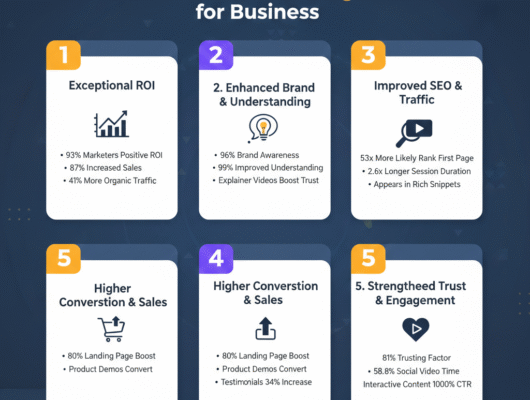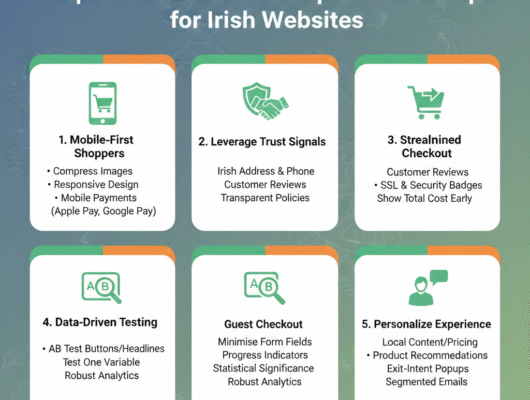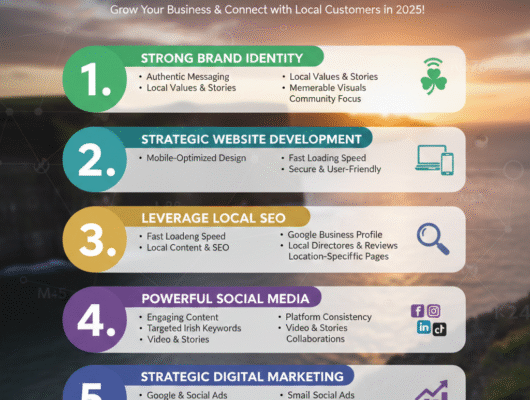

Digital marketing boosts small-business growth by offering affordable, targeted strategies that increase visibility and customer engagement. Techniques like SEO and social media help businesses connect with local and global customers, driving brand awareness. Email marketing and SEO provide high ROI, while content marketing builds authority. Digital tools enhance real-time engagement and measurable results, enabling businesses to scale. The 70/20/10 and 3-3-3 rules ensure focused, efficient campaigns. With the right strategies, companies can thrive, even in economic shifts.
How Digital Marketing Fuels Small Business Growth
Digital marketing accelerates small business growth by offering cost-effective, targeted, and measurable strategies that boost visibility, engage customers, and enhance competitiveness against larger, more established brands. With tools like SEO, social media, and paid ads, small businesses can directly reach specific demographics on a global scale. This helps them foster customer loyalty through direct interaction and enables them to optimize their campaigns in real time, maximizing ROI (Return on Investment).
Why is digital marketing essential for reaching local customers?
Digital marketing is essential for reaching local customers because it offers precise, cost-effective, and measurable targeting. Techniques like geotargeting and local SEO help boost visibility in specific neighborhoods, engaging directly with nearby prospects and driving foot traffic more effectively than traditional methods.
By using digital marketing tools, businesses can focus on local customers in a way that’s both targeted and efficient. Geotargeting allows businesses to tailor their messages based on specific locations, making it easier to attract local attention. For example, a local coffee shop can use these techniques to promote special offers to people within a few miles, maximizing the impact of their marketing budget.
Which digital marketing strategies provide the highest return on investment?
The digital marketing strategies that provide the highest return on investment (ROI) are email marketing and Search Engine Optimization (SEO). Email marketing offers a 36:1 to 42:1 return, while SEO delivers long-term, low-cost lead generation.
Email marketing stands out for its high ROI. This strategy allows businesses to reach a targeted audience with tailored messages directly. By building and maintaining an engaged email list, businesses can send out promotions, updates, and personalized content that resonate with customers, leading to higher conversion rates. The average return is impressive, with businesses getting back 36 to 42 times their initial investment.
Another major ROI winner is SEO. While it requires an initial investment of time and resources, SEO provides long-term benefits. By optimizing a website for search engines, businesses can attract organic traffic without ongoing costs like paid ads. Over time, this builds a steady stream of leads, making SEO a cost-effective way to generate quality leads for a small business.
How does search engine optimization increase organic traffic for small brands?
Search Engine Optimization (SEO) increases organic traffic for small brands by enhancing website visibility in unpaid search results, targeting user search intent, and building authority. This drives high-quality, relevant traffic that leads to higher conversions without the need for continuous ad spend.
Why does social media marketing improve brand awareness and engagement?
Social media marketing improves brand awareness and engagement by providing direct access to global audiences, enabling two-way communication, and using shareable content to build trust and loyalty. It turns passive consumers into active participants, boosting visibility and connections.
One of the main benefits of social media marketing is its ability to give businesses direct access to global audiences. Brands can reach customers in different regions, across various time zones, almost instantly. This immediate access increases brand awareness by getting the brand in front of a large and diverse audience. With the right strategy, brands can target specific demographics, ensuring they are seen by those most likely to engage with their products or services.
The interactive nature of social media is another key factor in improving engagement. Unlike traditional marketing, where communication is typically one-way, social media allows for two-way conversations. Customers can comment, like, and share posts, creating an ongoing dialogue between the brand and its audience. This interaction makes customers feel heard and valued, which fosters a deeper connection and higher engagement rates.
How do content marketing efforts establish authority in your niche?
Content marketing establishes authority in your niche by consistently creating high-quality, relevant content that addresses your audience’s needs. This approach builds trust, improves search engine rankings, and boosts credibility by following E-E-A-T principles—Experience, Expertise, Authoritativeness, and Trustworthiness.
Creating valuable, authoritative content educates your audience and positions your brand as a leader in the industry. This trust-building effort makes your audience more likely to engage with your content, trust your advice, and eventually choose your products or services. Over time, this
Primary Benefits of Online Marketing for Modern Small Businesses
Online marketing provides modern small businesses with cost-effective, targeted, and measurable strategies to compete with larger brands. Key benefits include enhanced brand visibility, improved ROI through precise audience targeting, real-time engagement with customers, and the ability to scale efforts quickly based on data-driven insights.
Cost-effective Strategies
Online marketing is highly cost-effective, allowing small businesses to reach their target audience without the need for expensive traditional advertising methods. It enables businesses to allocate resources more efficiently, ensuring that every dollar spent contributes to achieving specific marketing goals.
Targeted and Measurable Approaches
With online marketing, small businesses can precisely target their desired audience, ensuring their marketing efforts are focused on the right customers. This targeting allows businesses to measure the effectiveness of their campaigns, making it easier to adjust and optimize for maximum impact.
Enhanced Brand Visibility
One of the main advantages of online marketing is increased brand visibility. Through digital channels like social media, search engines, and email marketing, small businesses can reach a broader audience and establish a more recognizable presence in their industry.
Improved ROI
Online marketing helps small businesses improve their return on investment (ROI). By targeting specific demographics and using data-driven insights, businesses can allocate their marketing budget more effectively, ensuring higher conversion rates and better overall performance.
Real-Time Engagement
Online marketing allows businesses to engage with their customers in real-time. Whether it’s responding to inquiries, addressing concerns, or interacting on social media platforms, businesses can foster strong relationships with their audience, building trust and loyalty.
Scalability Based on Insights
Small businesses can scale their online marketing efforts quickly, adjusting strategies based on real-time data and customer feedback. This flexibility enables businesses to grow at their own pace, adapting to changes in customer preferences or market conditions.
What are the 5 benefits of digital marketing for scaling operations?
Digital marketing helps businesses scale through five key benefits: global reach, cost efficiency, precise targeting, measurable results, and automation-driven engagement. It allows companies to reach international audiences, run budget-friendly campaigns, target specific customer segments, track performance in real time, and automate customer interactions. Together, these advantages improve ROI, streamline operations, and enable businesses to grow faster and more efficiently worldwide.
How do the 4 pillars of digital marketing support a sustainable growth model?
The four pillars of digital marketing—Content, Communication, Community, and Commerce—support a sustainable growth model by creating a self-reinforcing loop that builds lasting assets, reduces customer acquisition costs, and fosters enduring brand loyalty over time.
Implementing Effective Marketing Frameworks and Rules
Implementing effective marketing frameworks involves aligning structured, data-driven models with business objectives to create consistent, scalable strategies. Frameworks like SWOT, 4Ps, and RACE guide decision-making by focusing on research, SMART goals, value propositions, and ongoing performance analysis.
How can the 7 C’s of digital marketing refine your communication strategy?
The 7 C’s of Digital Marketing—Customer, Content, Context, Community, Convenience, Cohesion, and Conversion—help brands communicate more effectively by focusing on relevance, consistency, and meaningful engagement.
A customer-centric approach ensures messages are personalized and aligned with user needs. High-quality content attracts and retains attention by providing real value. Context delivers the right message at the right time, while community engagement builds trust and long-term relationships. Convenience improves user experience through easy access and smooth interactions. Cohesion maintains consistent branding across all platforms, strengthening credibility. Finally, conversion turns engagement into action, achieving business goals.
Together, the 7 C’s create a more effective, customer-focused digital marketing strategy.
Why does the 70/20/10 rule in digital marketing balance innovation and stability?
The 70/20/10 rule in digital marketing helps balance stability and innovation by smartly allocating resources. 70% is invested in proven strategies that consistently drive results, ensuring reliability and steady performance. 20% goes to promising tactics that have shown potential and can be scaled for growth. The remaining 10% is dedicated to high-risk, experimental ideas that encourage innovation without endangering core success.
How does the 3-3-3 rule in marketing optimize short-term campaign focus?
The 3-3-3 rule in marketing optimizes short-term campaign focus by limiting the strategy to three key messages, three target audience segments, and three marketing channels. This approach prevents resource dilution, ensuring clarity, consistency, and impact for immediate results.
By sticking to three messages, marketers avoid confusion and stay on track. Similarly, targeting three audience segments ensures relevance without stretching resources too thin. With just three channels, the message reaches the right people in a focused manner.
This streamlined approach helps marketers deliver strong, clear campaigns that drive immediate action and deliver measurable outcomes.
Strengthening Business Resilience Through Digital Channels
Strengthening business resilience through digital channels involves using automation, cloud technology, and data-driven insights to maintain continuity during disruptions. This digital transformation boosts agility, decision-making, and performance, especially through zero-trust cybersecurity, hybrid work, and customer-centric interfaces.
How can digital marketing grow your business during economic shifts?
Digital marketing helps grow your business during economic shifts by providing cost-effective, highly targeted, and measurable strategies that quickly adapt to changing consumer behavior. It enables businesses to reach the right audience and maintain visibility even in tough times.
Why is the 7 times 7 rule in marketing relevant for message retention?
The 7 times 7 rule in marketing is relevant for message retention because it emphasizes the need for prospects to encounter a brand message at least seven times before taking action. This repeated exposure boosts familiarity, credibility, and trust.
Repetition through multiple channels increases the likelihood that a message will stick in the audience’s memory. When prospects hear or see a message several times, they’re more likely to remember it and take action, whether it’s making a purchase or engaging further.
Building familiarity is key to retention. If a potential customer encounters your brand repeatedly, it’s no longer a stranger. Trust grows with familiarity, and once they trust your brand, they’re more inclined to follow through on your message.
Moreover, today’s market is filled with distractions, and people have limited attention spans. The Rule of 7 helps messages cut through the noise. With consistent exposure, your brand stays top of mind, improving recall even when competing for attention.
Conclusion
Digital marketing offers small businesses a powerful toolkit to drive growth with affordable, targeted strategies. SEO, social media, and email marketing maximize visibility, engagement, and ROI, while content marketing builds authority. Tools like geotargeting help businesses connect with local customers, and real-time insights boost decision-making. Scaling is easy with cost-effective methods, data-driven adjustments, and automation. For success, keep experimenting with strategies and track results. Start implementing these tactics today to grow your business efficiently!