
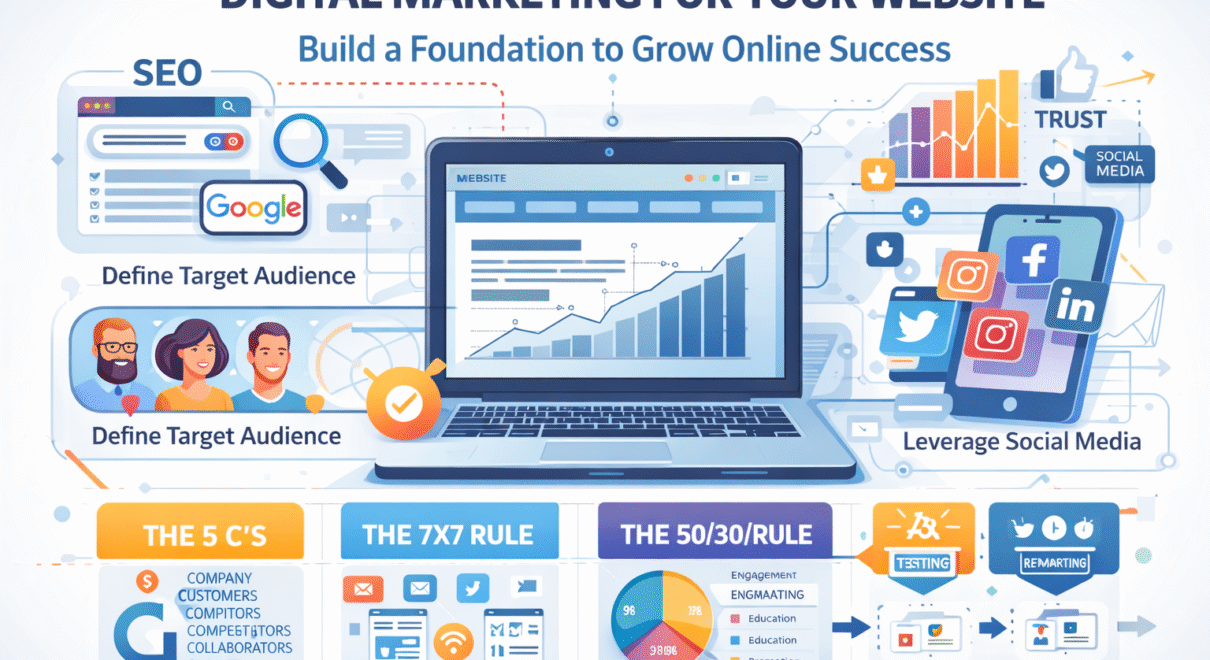
Digital marketing for your website works best when it starts with a clear foundation that aligns goals, channels, and results. Beginners grow faster by knowing their audience, using SEO, social media, and free analytics the right way. Core rules and frameworks like the 5 C’s, 7×7 rule, and 50/30/20 balance keep efforts focused and consistent. Daily habits, smart testing, and remarketing turn data into action. Build the system first, then scale with confidence.
Why does digital marketing for your website require a foundational strategy?
Digital marketing for a website necessitates a foundational strategy to optimize all marketing efforts, ensuring they align with business goals and contribute to measurable outcomes. A well-structured digital marketing strategy includes key elements like SEO, social media, and user experience enhancements, all of which should work together cohesively. Without this foundation, businesses may waste resources on ad-hoc efforts that fail to deliver meaningful results.
A solid foundational strategy acts as a roadmap that helps avoid ineffective marketing activities. It improves brand messaging consistency and drives compound growth over time. Furthermore, it enhances measurable ROI by tracking and refining efforts across various digital channels. The strategy also helps businesses build long-term digital authority, creating a competitive advantage in their respective industries.
How can beginners start digital marketing for your website?
Beginners starting digital marketing for their website should focus on building a solid, measurable foundation with free strategies. This involves defining the target audience, optimizing the website for SEO, using social media, and tracking performance with free analytics tools.
Define Your Target Audience
Before jumping into digital marketing, beginners need to identify their target audience. This helps create content and marketing messages that resonate with the right people. Understanding who your audience is, what they need, and how they behave online is essential for effective outreach.
Optimize Your Website for SEO
Search Engine Optimization (SEO) is a crucial part of digital marketing. Optimizing your website helps improve its visibility on search engines like Google, making it easier for potential customers to find you. Beginners should focus on basic SEO techniques, like keyword research, optimizing page titles and meta descriptions, and ensuring the website is mobile-friendly.
Leverage Social Media
Social media platforms are powerful tools for digital marketing. Beginners should start by selecting the platforms where their target audience is most active, whether that’s Facebook, Instagram, or LinkedIn. Engaging with users through posts, comments, and interactions can build relationships and drive traffic to the website.
Utilize Free Analytics Tools
To track the effectiveness of digital marketing efforts, beginners can use free analytical tools, such as Google Analytics. These tools allow you to measure website traffic, see what content is performing well, and adjust strategies based on real-time data.
What is the #1 rule for digital marketing for your website?
The #1 rule for digital marketing for your website is to know your audience. Understanding who they are, what they need, and how they engage with online content is crucial for creating effective and targeted marketing strategies.
How does digital marketing for your website utilize the 5 C’s?
Digital marketing for your website uses the 5 C’s—Company, Customers, Competitors, Collaborators, and Climate—to shape strategies. By understanding your company’s goals, customer needs, competitor tactics, partnerships, and market climate, campaigns are optimized for better results.
For instance, focusing on your company’s unique strengths helps define a clear message, while analyzing customers helps tailor content that resonates. Knowing competitors’ moves ensures your website stands out. Collaborators—like influencers or other brands—can boost visibility, while considering the market’s climate (trends, regulations) keeps your campaigns relevant. All these elements drive conversions and foster meaningful online connections.
How does the 7×7 rule impact digital marketing for your website?
The 7×7 rule impacts digital marketing for your website by emphasizing that prospects must encounter your brand at least seven times to trust and feel confident in making a purchase. This drives multi-channel strategies for consistent exposure.
For your website, applying the 7×7 rule means using multiple platforms—like search engines, social media, and email marketing—to create repeated touchpoints with potential customers. Each exposure builds familiarity and trust, nudging visitors closer to conversion. For example, your brand might appear in a Google search, be shared on social media, and follow up through email reminders.
How do foundational frameworks support digital marketing for your website?
Foundational frameworks support digital marketing for your website by offering a structured, data-driven approach that aligns business goals with user needs. They ensure consistent messaging, which improves key elements like SEO, content strategy, and user experience, boosting conversion rates and ROI.
In digital marketing, frameworks help define clear marketing processes and goals. By setting these up from the start, you ensure that all your efforts, whether in SEO, content creation, or social media, are working toward a unified purpose. This clarity improves website performance.
Should the 50/30/20 rule optimize digital marketing for your website?
Yes, the 50/30/20 rule should optimize digital marketing for your website. By balancing 50% engagement, 30% education, and 20% promotion, it helps build trust, boost engagement, and drive conversions, creating a well-rounded content strategy.
For digital marketing, especially on social media or your website, the 50/30/20 rule ensures that content serves multiple purposes. Engaging 50% of your content makes your audience feel involved and valued, creating a connection that encourages return visits and interaction.
The 30% educational content builds authority by offering useful information, solving problems, or answering questions. This educates visitors and positions your brand as a helpful, reliable source, further strengthening trust with your audience.
How do daily work habits and sales failures affect digital marketing for your website?
Daily work habits and sales failures directly impact digital marketing for your website. Consistent, focused habits drive optimization, improving visibility and traffic. In contrast, sales failures that go unaddressed lead to wasted resources and harm your brand’s reputation.
Good daily work habits, such as regularly updating content, monitoring SEO performance, and engaging with the audience, create a “compound interest” effect. Over time, this consistency boosts your website’s visibility, drives more traffic, and increases conversions, making your marketing efforts more effective.
What are the benefits of A/B testing in digital marketing on your website?
A/B testing in digital marketing benefits your website by comparing two versions of a page to see which performs better, increasing conversions, improving user experience, and providing data-driven insights. It helps reduce bounce rates and boosts ROI.
One major benefit of A/B testing is the increase in conversion rates. By testing different elements, like headlines, calls to action, or images, you can determine what resonates best with your audience. This leads to higher conversion rates and more leads or sales.
A/B testing also helps reduce bounce rates. If users land on a page but leave quickly, it can signal that the page isn’t engaging enough. Testing different versions of a page allows you to figure out which layout or content keeps users interested longer.
How can remarketing improve your website’s digital marketing efforts?
Remarketing improves your website’s digital marketing efforts by targeting users who previously visited your site, boosting conversion rates, brand recall, and ROI. Tailored ads based on user behavior re-engage high-intent visitors, increasing the chances of driving sales.
By focusing on users who have already shown interest in your products or services, remarketing increases the likelihood of converting them into paying customers. For example, if someone abandons a shopping cart, remarketing ads can remind them to complete their purchase, significantly improving conversion rates.
Remarketing also strengthens brand recall. Repeated exposure to your brand through tailored ads keeps it top of mind for potential customers. This increased visibility can help you stay competitive and relevant, especially when users are ready to make a purchase.
Conclusion
Digital marketing for your website delivers results when strategy, habits, and data work together. A clear foundation guides SEO, social media, analytics, and testing toward real business goals. Knowing your audience shapes content, frameworks keep efforts aligned, and rules like 7×7 and 50/30/20 drive steady trust and growth. Daily action, A/B testing, and remarketing turn insight into revenue. Build smart, stay consistent, and start optimizing your website today.