
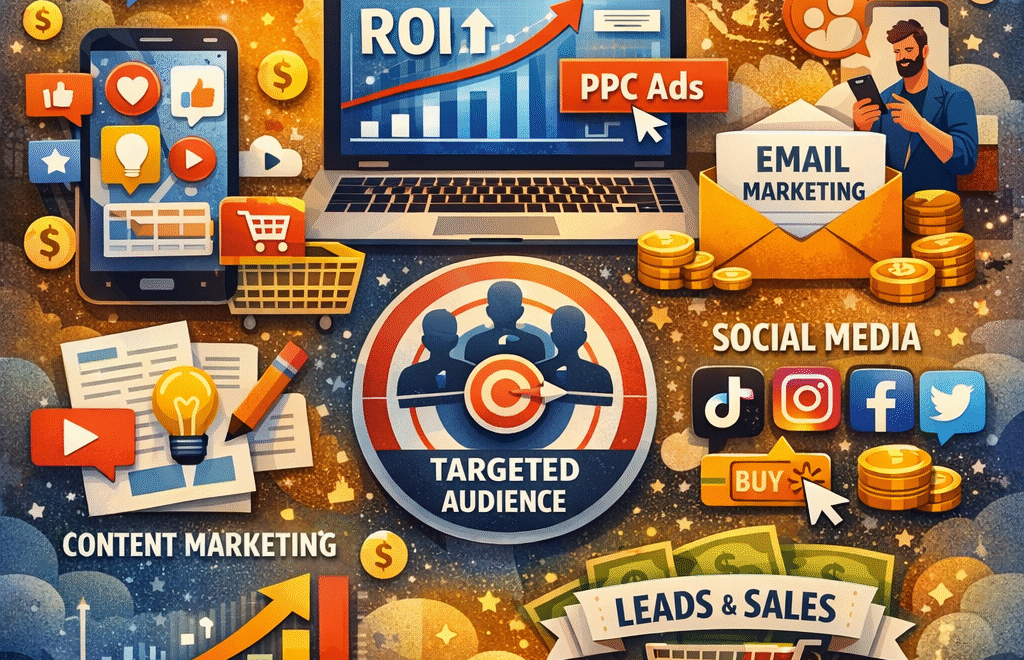
Digital marketing today focuses on promoting products online via social media, websites, email, and search engines. It differs from traditional methods by offering precise targeting, real-time adjustments, and measurable results. Channels like social media, SEO, and email marketing drive growth. Successful marketers blend technical skills with creativity. Digital marketing helps businesses connect with global audiences, improve customer acquisition, and build brand authority. Small businesses can compete effectively, and digital strategies continue to offer high ROI.
What Is Digital Marketing in Today’s Economy?
Digital marketing in today’s economy is the essential, data-driven practice of promoting brands, products, or services through online channels such as social media, search engines, websites, and email. This approach is designed to engage customers where they spend most of their time, ensuring that marketing efforts align with consumer behavior. By using these digital means, businesses can connect with their target audience more effectively than traditional methods.
The digital marketing landscape is characterized by its use of various online tools and platforms, including websites, mobile devices, social media, and search engines. This allows businesses to leverage multiple channels to promote and sell their products and services.
How Does Digital Marketing Differant from Traditional Advertising?
Digital marketing differs from traditional advertising in its focus on online channels such as social media, search engines, and email. It enables more precise targeting, real-time adjustments, and measurable results, while traditional advertising relies on offline media like TV, radio, and print for broad reach and visibility.
Targeting and Precision
One key difference between digital marketing and traditional advertising is the level of targeting precision. Digital marketing allows for tailored campaigns based on user data, such as browsing habits and interests. Businesses can target specific demographics, locations, and even behaviors in real time. In contrast, traditional advertising, whether through TV, print, or billboards, casts a much wider net, often reaching a general audience. This means businesses may pay for visibility that doesn’t always match their target market.
Cost-Effectiveness and Reach
Digital marketing is generally more cost-effective. Online campaigns can be scaled up or down based on budget, and businesses can optimize their spending by focusing on the most effective channels. Traditional advertising, on the other hand, often involves high upfront costs for TV commercials, print ads, or billboards, with little ability to adjust the campaign once it’s launched. While traditional methods can be more expensive, they can still be effective for broad reach in certain industries, especially those targeting mass audiences.
Which Digital Marketing Channels Drive the Most Growth?
The digital marketing channels driving the most growth are Social Media (particularly TikTok/Instagram), Search Engine Optimization (SEO), Email Marketing, and Influencer Marketing. These channels leverage high engagement, targeted reach, and authentic content to maximize ROI and drive sales.
What Skills Define a Successful Digital Marketer?
A successful digital marketer blends technical expertise with soft skills. They master data analytics, SEO/SEM, content creation, and tools like Google Analytics and CRM. Adaptability, creativity, and strategic thinking help them optimize user experience and boost ROI.
Successful digital marketers need a blend of hard skills like SEO/SEM, content creation, and platform proficiency. They also rely on soft skills such as creativity and adaptability. For example, understanding consumer psychology and leveraging AI tools allows them to craft strategies that increase engagement and conversions.
Why Is Digital Marketing Important for Modern Business Success?
Digital marketing is crucial for modern business success as it enables targeted, cost-effective, and measurable outreach to a global audience. It offers real-time, data-driven insights into customer behavior, optimizing ROI through platforms like social media and search engines.
Through digital marketing, businesses can effectively attract and target new customers and leads. The precision of targeting specific demographics and audiences ensures that marketing efforts reach the right people at the right time. With these advantages, businesses can connect with a vast, internet-connected audience, fostering growth and engagement in an increasingly digital world.
By leveraging real-time data and audience insights, businesses can continually optimize their strategies for better results, ensuring they stay competitive and aligned with market demands.
How Does Digital Marketing Build Brand Authority Online?
Digital marketing builds online brand authority by consistently delivering high-quality, value-driven content, optimizing for search engine visibility (SEO), and leveraging social proof. Through content marketing, expert blogging, and social media engagement, brands establish trust and showcase expertise.
One of the most powerful ways digital marketing builds brand authority is by enhancing visibility through SEO. Search engine optimization helps your brand appear at the top of search results, making it easier for potential customers to find you. This increased visibility leads to more traffic and establishes your brand as a relevant, trusted source in your industry.
Why Do Small Businesses Require Digital Marketing to Compete?
Small businesses require digital marketing to compete because it offers cost-effective, targeted strategies that enhance visibility, enable precise audience targeting, and deliver measurable, real-time data to optimize ROI. It helps small businesses reach a broader audience and build brand loyalty.
For small businesses, digital marketing provides a competitive edge. Unlike traditional marketing, digital channels allow for more affordable and focused strategies, making it possible for smaller businesses to compete with larger companies. With tools like SEO, content marketing, and social media, small businesses can expand their reach without draining their budget.
Moreover, digital marketing allows for precise audience targeting. Small businesses can tailor their campaigns to specific demographics, ensuring they engage with the right people at the right time. This helps maximize efficiency and effectiveness, which is crucial for building strong customer relationships and fostering brand loyalty.
Can Digital Marketing Improve Customer Acquisition Costs?
Yes, digital marketing can improve customer acquisition costs (CAC) by using precise targeting, organic strategies like SEO, and automation. These methods often result in 30% higher efficiency in customer acquisition compared to traditional marketing methods.
One of the key ways digital marketing reduces CAC is through precise targeting. By focusing on specific audiences, businesses ensure that marketing efforts reach those most likely to convert. This eliminates wasted spend on uninterested customers, making each marketing dollar go further.
How Do the Different Types of Digital Marketing Function?
Digital marketing functions by using online channels such as websites, search engines, social media, email, and mobile apps to connect with audiences. Various types, like SEO, PPC, content, and social media, work together to build brand awareness and drive traffic.
Each type of digital marketing serves a specific purpose in connecting businesses with their target audience. SEO (Search Engine Optimization) focuses on improving a website’s ranking on search engines, driving organic traffic by targeting relevant keywords. The goal is to increase visibility without relying on paid ads.
What Role Does Content Marketing Play in the Sales Funnel?
Content marketing plays a crucial role in the sales funnel by providing relevant information at each stage—awareness, consideration, and decision. It builds trust, nurtures leads, and converts them into buyers, turning passive visitors into active, informed leads.
At the awareness stage, content marketing helps potential customers discover your brand. Through blog posts, infographics, or videos, you educate your audience about common problems and introduce solutions that resonate with them. This initial content is not overly promotional but informative, sparking interest and encouraging visitors to learn more.
As customers move into the consideration stage, content marketing nurtures these leads with more detailed information. Case studies, product comparisons, webinars, and whitepapers help potential buyers evaluate their options. This content demonstrates your expertise, builds trust, and guides customers toward considering your product or service as a viable solution.
Why Is Email Marketing Still a High-ROI Strategy?
Email marketing is still a high-ROI strategy because it delivers direct access to an engaged audience, yielding returns of $36-$42 for every $1 spent. It bypasses third-party algorithms and leverages personalized, automated, and segmented messaging to boost customer retention.
The reason email marketing continues to provide exceptional ROI is its ability to connect directly with customers. Unlike social media or paid ads, email marketing allows businesses to engage with a specific, opted-in audience without relying on the unpredictability of third-party algorithms. This direct connection ensures that messages reach the intended recipients.
Should Your Business Strategy Prioritize Digital Marketing?
Yes, your business strategy should prioritize digital marketing because it is essential for visibility, targeting, and cost-effective growth. Over 90% of buying journeys begin online, and a well-defined digital strategy maximizes resources, enabling precise targeting and measurable results.
What Is an Example of a Successful Digital Marketing Campaign?
An example of a successful digital marketing campaign is Apple’s #ShotoniPhone. It utilized user-generated content (UGC) to showcase the iPhone’s camera quality. By encouraging users to share high-quality photos on social media, Apple boosted engagement and brand desire.
The success of the #ShotoniPhone campaign lies in its innovative use of UGC. Apple encouraged users to share their own photos taken with the iPhone, effectively creating authentic social proof. These user-generated posts not only displayed the iPhone’s camera capabilities but also fostered a sense of community and ownership among consumers.
How Can Businesses Generate Revenue Through Digital Marketing?
Businesses generate revenue through digital marketing by driving targeted traffic, converting leads, and fostering customer loyalty using data-driven strategies. Methods like pay-per-click (PPC) ads, content marketing, SEO, and email marketing all play key roles in boosting sales and maximizing ROI.
One way businesses generate revenue is through PPC ads. By paying for ad placements on platforms like Google or social media, businesses can gain immediate visibility. When these ads are targeted to the right audience, they drive high-quality traffic that is more likely to convert into sales.
Content marketing and SEO are powerful tools for building long-term revenue. By creating valuable content and optimizing it for search engines, businesses can attract organic traffic. Over time, this positions the business as an authority in its industry, driving consistent lead generation and increasing sales.
Email marketing plays a crucial role in nurturing relationships with customers. By sending personalized emails, businesses can engage customers, promote offers, and encourage repeat purchases. This helps build loyalty, turning one-time buyers into long-term customers, which is vital for sustained revenue growth.
Conclusion
Digital marketing offers businesses precise targeting, cost-effective strategies, and measurable results across channels like social media, SEO, and email. It drives growth by connecting brands with audiences through data-driven insights and real-time adjustments. Small businesses can leverage digital tools to compete effectively with larger companies. By using strategies like content marketing and PPC ads, businesses can generate revenue and build customer loyalty. Ready to grow your brand? Start by implementing digital marketing to drive measurable success.