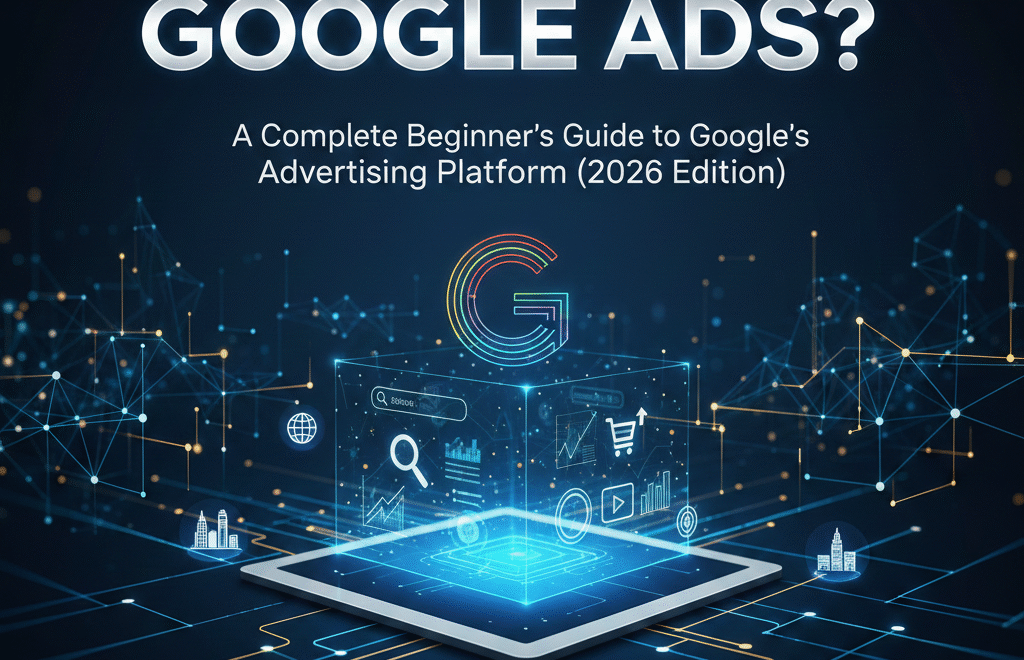
Google has transformed how businesses reach customers online, and at the heart of this transformation is Google Ads. Whether you’re running a small local shop in Dublin or managing a growing e-commerce brand, understanding Google Ads can unlock powerful opportunities to connect with people actively searching for what you offer.
In 2026, approximately 65% of businesses worldwide use Google Ads to run their PPC campaigns, and for good reason. This platform delivers measurable results, precise targeting, and the ability to reach customers at the exact moment they’re looking for your products or services. Let’s explore what makes Google Ads the most trusted advertising platform for businesses across Ireland and beyond.
What is Google Ads? Platform Overview for Businesses
Google Ads is an online advertising platform developed by Google, where advertisers bid to display brief digital advertisements, service offerings, product listings, and videos to web users. Think of it as a bridge connecting your business with potential customers who are actively searching for what you provide.
The platform operates across Google’s entire ecosystem. Your ads can appear on Google Search results, YouTube, and millions of other websites in the Google Network. This expansive reach means your business can connect with customers wherever they spend their time online.
What makes Google Ads particularly powerful is its intent-driven approach. Unlike traditional advertising that interrupts people, Google Ads places your message in front of users who are already searching for related products or services. When someone in Cork searches for “best coffee shop near me” or “emergency plumber,” your ad can appear precisely when they need your services most.
How Google Ads Works: The Auction System Explained
At its foundation, Google Ads operates on a Pay-Per-Click (PPC) model, meaning you only pay when someone interacts with your ad, usually by clicking it. This cost-effective approach ensures you’re investing in actual engagement rather than just visibility.
The platform uses an auction system where each time a user performs a search, an automated auction runs instantly to determine which ads will appear, their placement on the page, and the price each advertiser pays per click. But this isn’t a simple highest-bidder-wins scenario.
Google evaluates multiple factors to determine which ads deserve the top positions. Your bid amount matters, but equally important is your Quality Score, which measures how relevant and useful your ads are to users. The higher your Quality Score, the lower your cost per click and the better your ad placement. This system rewards businesses that create genuinely helpful, relevant advertising experiences.
Modern Google Ads campaigns leverage artificial intelligence extensively. In 2026, AI stopped assisting Google Ads and started driving it, with the platform shifting from offering AI-powered features as optional enhancements to making them fundamental components of campaign success. This evolution means the platform can now optimize bids, target audiences, and adjust strategies in real-time based on performance data.
Types of Google Ads Campaigns in 2026
Google Ads isn’t a one-size-fits-all solution. The platform offers multiple campaign types designed for different business goals and customer touchpoints.
Search Campaigns display text ads on Google’s search results when users enter relevant keywords. These are ideal for capturing high-intent customers actively looking for specific solutions. For instance, if you offer digital marketing services, Search campaigns ensure your business appears when potential clients search for marketing help.
Display Campaigns showcase visual banner ads across Google’s network of over 2 million websites and apps. While the average CTR for Google Display Ads is just 0.46%, they excel at building brand awareness and reaching audiences earlier in their buying journey.
Shopping Campaigns are essential for e-commerce businesses. Shopping ads display detailed product information directly in Google’s search results and the Shopping tab, including product images, prices, store names, and customer reviews. These ads give customers everything they need to make purchasing decisions quickly.
Video Campaigns run on YouTube, which reaches over 90% of online adults globally. 70% of YouTube viewers say ads help them discover new brands, making this format powerful for building awareness and consideration.
Performance Max Campaigns represent Google’s latest innovation in automated advertising. With Performance Max, you provide campaign goals and creative assets, and Google’s AI automatically optimizes ad delivery across all channels, including Search, Display, YouTube, Gmail, and Discover. This approach works particularly well when combined with comprehensive Google Ads management strategies.
Understanding Google Ads Costs and Pricing Models
One of the most common questions about Google Ads is simple: how much does it cost? The answer depends on several factors, but the flexibility of the platform accommodates businesses of virtually any size.
The average cost per click in Google Ads in 2025 is $5.26, though this varies dramatically by industry and competition level. The average cost-per-click (CPC) on Google Ads ranges between $1 and $2 for less competitive sectors, while industries like Attorneys & Legal Services see $8.58, and Dentists & Dental Services reach $7.85.
Small businesses typically spend between $1,000 and $10,000 per month on Google Ads, though you can start with much smaller budgets to test effectiveness. The beauty of Google Ads lies in its flexibility. You set daily budgets and can pause or adjust spending anytime based on performance.
What about return on investment? The numbers tell a compelling story. The average business earns around $2 in revenue for every $1 spent on Google Ads, representing a 200% return. Google Ads delivers a median ROAS of 3.52, outperforming Facebook (2.21), which explains why businesses continue increasing their Google Ads investments year after year.
For businesses seeking professional management to maximize these returns, partnering with specialists who understand both Google Ads optimization and broader digital marketing strategy can significantly improve campaign performance.
Key Google Ads Terminology Every Beginner Should Know
Navigating Google Ads becomes easier once you understand the essential terminology that shapes campaign strategy and performance measurement.
Keywords are the words and phrases you bid on to trigger your ads. When someone searches using your chosen keywords, your ad becomes eligible to appear. Selecting the right keywords requires understanding what terms your customers actually use when searching for your solutions.
Quality Score is Google’s rating of the quality and relevance of your keywords, ads, and landing pages. Scores range from 1 to 10, with higher scores leading to lower costs and better ad positions. Improving Quality Score involves creating highly relevant ads and ensuring your landing pages deliver on what your ads promise.
Ad Rank determines your ad position on search results pages. It’s calculated using your bid amount, Quality Score, and the expected impact of ad extensions and other formats. Higher Ad Rank means better visibility and potentially lower costs per click.
Impressions represent how many times your ad was shown, while Clicks indicate how many people clicked your ad. The ratio between these creates your Click-Through Rate (CTR), a key performance indicator. The average click-through rate in Google Ads in 2026 is 6.66%, though this varies significantly by industry.
Conversions are the actions you want people to take after clicking your ad, such as making a purchase, filling out a form, or calling your business. Tracking conversions accurately is essential for understanding campaign effectiveness and optimizing for better results.
Cost Per Acquisition (CPA) measures how much you pay, on average, to acquire one customer or lead. This metric helps determine whether your advertising investment delivers profitable returns.
Benefits of Google Ads for Business Growth
Why do over 80% of global businesses use Google Ads for online advertising? The platform offers distinct advantages that traditional marketing channels struggle to match.
Instant Visibility stands as Google Ads’ most immediate benefit. While SEO strategies require months to build organic rankings, Google Ads can place your business at the top of search results within hours of campaign launch. This speed proves invaluable when launching new products or entering new markets.
Precise Targeting ensures your ads reach the right people at the right time. You can target based on keywords, location, device, time of day, demographics, and even specific audiences who’ve visited your website previously. For businesses focused on local customers, combining Google Ads with Local SEO creates a powerful strategy for dominating local search results.
Measurable Results provide complete transparency into campaign performance. You can track exactly how many people saw your ads, clicked them, and completed desired actions. This data-driven approach enables continuous optimization and ensures every euro spent delivers maximum impact.
Budget Control means you never spend more than your set limits. Unlike traditional advertising, where you pay upfront regardless of results, Google Ads charges only when people engage with your ads. You can start small, test what works, and scale successful campaigns confidently.
Competitive Advantage emerges from Google Ads’ ability to level the playing field. Small businesses can compete effectively against larger competitors by targeting specific niches, locations, or customer segments where they excel. Smart targeting and relevant messaging often outperform large budgets.
Getting Started with Google Ads: Setup Basics
Setting up your first Google Ads campaign might feel overwhelming, but breaking the process into clear steps makes it manageable.
Create Your Account by visiting ads.google.com and signing up with your business email. Google will guide you through initial setup, asking for basic business information and billing details.
Define Your Goals before building campaigns. Are you focused on driving website traffic, generating leads, increasing phone calls, or boosting online sales? Clear goals shape every campaign decision, from choosing campaign types to setting bidding strategies.
Research Keywords that potential customers use when searching for your products or services. Google’s Keyword Planner tool helps identify relevant keywords, shows search volumes, and estimates competition levels. Focus on terms that balance search volume with relevance to your offerings.
Set Your Budget based on business goals and resources. Start conservatively to test performance, then scale successful campaigns. Remember that most campaigns capture only 38% of available impressions, leaving room for growth as you optimize and increase budgets.
Create Compelling Ad Copy that speaks directly to user needs and includes clear calls to action. Your ads should promise value and align closely with the keywords you’re targeting. The more relevant your ads are to user searches, the better they’ll perform.
Design Landing Pages that match your ad promises. When someone clicks your ad for “affordable web design in Dublin,” they should land on a page specifically about web design services, not your general homepage. This relevance improves conversion rates and Quality Scores. For businesses needing professional web development, ensure landing pages are optimized for both user experience and conversions.
Install Conversion Tracking to measure campaign success accurately. Without tracking, you can’t know which keywords, ads, or campaigns drive actual business results. This data becomes essential for optimizing performance over time.
Google Ads Performance Benchmarks and What to Expect
Understanding industry benchmarks helps set realistic expectations and identify opportunities for improvement in your campaigns.
The average conversion rate across all industries on Google Search is around 4.4%, meaning roughly four out of every 100 clicks result in desired actions. However, performance varies significantly by sector. Dating and Personals have the highest conversion rate at 9.64%, followed by Legal Services (6.98%) and Consumer Services (6.64%).
Click-through rates also show substantial variation. Industries with the highest average click-through rates include Arts & Entertainment at 13.10%, Sports & Recreation at 9.19%, and Shopping, Collectibles, & Gifts at 8.92%. If your CTR falls significantly below industry averages, it signals opportunities to improve ad relevance and targeting.
Users who click on Google ads are 50% more likely to convert than organic visitors, highlighting the value of paid search for capturing high-intent traffic. This conversion advantage, combined with precise targeting capabilities, explains why businesses continue investing heavily in Google Ads despite rising costs.
Mobile accounts for 61.9% of ad clicks, emphasizing the critical importance of mobile-optimized campaigns and landing pages. If your website isn’t mobile-friendly, you’re losing over half of potential customers, even if your ads perform well.
For businesses running comprehensive digital marketing campaigns, combining Google Ads with Facebook Ads and social media marketing creates multiple touchpoints that reinforce messaging and improve overall conversion rates.
Google AdWords vs Google Ads: Understanding the Rebrand
If you’ve heard people mention “Google AdWords,” you might wonder whether it’s different from Google Ads. The short answer is no, they’re the same platform.
Google launched AdWords in 2000, and the platform was rebranded as Google Ads in 2018 to reflect its evolution beyond simple text ads on search results. The rebrand unified Google’s various advertising products under one name, making it simpler for businesses to access tools for search, display, video, and shopping campaigns.
The core functionality remains consistent. Google Ads still operates on the same auction-based PPC model that made AdWords successful. The name change primarily acknowledged that the platform had grown far beyond keywords and text ads to encompass a comprehensive suite of advertising solutions across Google’s entire ecosystem.
When someone asks “How does Google AdWords work?” or “What is Google AdWords?” they’re referring to the current Google Ads platform with all its modern features, AI capabilities, and expanded campaign types.
Common Mistakes to Avoid When Starting with Google Ads
Understanding pitfalls helps new advertisers avoid wasted budgets and disappointing results.
Targeting Too Broadly dilutes your budget across audiences unlikely to convert. Start with focused targeting around your core offerings, then expand gradually as you identify what works. Specificity typically outperforms broad approaches, especially with limited budgets.
Ignoring Negative Keywords means your ads might appear for irrelevant searches. If you sell premium furniture, add “cheap” and “free” as negative keywords to avoid clicks from bargain hunters. Regular review and refinement of negative keywords prevents wasted spending.
Sending Traffic to Your Homepage rather than relevant landing pages reduces conversion rates significantly. Every ad group should direct to specific pages that match the ad’s promise and user intent. Generic destinations create friction that costs conversions.
Neglecting Mobile Users represents a critical oversight when mobile generates the majority of clicks. Ensure your website loads quickly on mobile devices and provides excellent user experiences regardless of screen size.
Setting and Forgetting Campaigns leads to declining performance over time. Google Ads requires ongoing optimization, testing, and refinement. Markets change, competitors adjust, and seasonal patterns shift. Regular attention keeps campaigns performing at their peak.
Following All Google Recommendations Blindly without considering your specific business context can hurt performance. Google’s optimization suggestions prioritize Google’s revenue, not necessarily yours. Evaluate recommendations critically and test changes in controlled ways before broad implementation.
The Future of Google Ads: Trends Shaping 2026 and Beyond
Google Ads continues evolving rapidly, driven by technological advances and changing user behaviors.
Artificial Intelligence Integration represents the most significant shift. In 2025, Google accelerated growth by launching powerful new AI innovations in Google Ads, including cutting-edge measurement solutions like Meridian and powerful advertising tools like AI Max. These AI tools handle bidding optimization, audience targeting, and even creative generation with increasing sophistication.
First-Party Data Emphasis grows more critical as privacy regulations tighten and third-party cookies phase out. In early 2025, 71% of digital publishers said first-party data is now their primary source of positive ad performance. Businesses that collect and leverage their own customer data through CRM integration and website analytics gain significant competitive advantages.
Voice Search Optimization matters more as users adopt conversational search patterns. Approximately 91.8% of all Google search queries are long-tail keywords, meaning they contain specific, multi-word phrases and indicate high intent. Advertisers must adapt to these natural language patterns in keyword selection and ad copy.
AI-Powered Search Experiences change where and how ads appear. Around 60% of U.S. Google searches now end without a click, with that number jumping to nearly 80% on mobile devices, driven in part by Google’s AI-powered overviews directly in the SERP. As search evolves, so must advertising strategies.
Automation with Strategic Oversight defines successful campaigns. While AI handles tactical optimization, human expertise remains essential for strategy, creative direction, and ensuring campaigns align with broader business goals. The most effective advertisers combine AI capabilities with experienced management.
Making Google Ads Work for Your Business
Google Ads represents one of the most powerful tools available for businesses seeking to grow their customer base and increase revenue. Over 7 million businesses and marketing agencies rely on Google Ads as their primary channel to reach customers through search, demonstrating the platform’s enduring value despite increasing complexity and competition.
Success with Google Ads requires more than just launching campaigns. It demands clear strategy, continuous optimization, quality creative assets, and accurate performance tracking. For businesses without internal expertise, working with specialists who understand both Google Ads mechanics and your specific industry can accelerate results while avoiding costly mistakes.
Whether you’re a local business seeking nearby customers or an e-commerce brand targeting national audiences, Google Ads offers the tools and reach to connect with people actively searching for what you provide. The key lies in understanding how the platform works, setting realistic expectations based on industry benchmarks, and committing to ongoing optimization as markets and technologies evolve.
In 2026’s competitive digital landscape, businesses that master Google Ads gain measurable advantages in visibility, customer acquisition, and sustainable growth. Start small, test systematically, and scale what works. Your journey with Google Ads begins with understanding these fundamentals, then applying them strategically to achieve your unique business goals.




1 Comment