
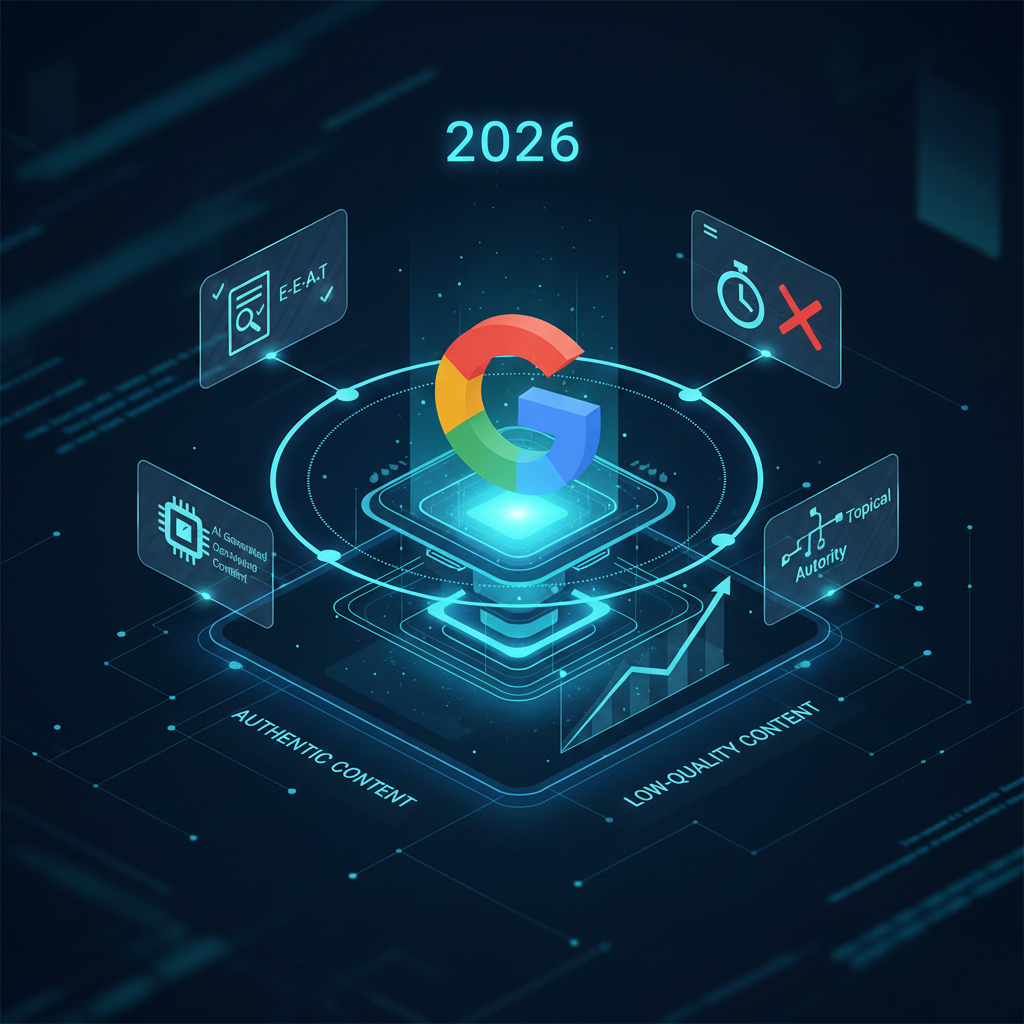
The Google algorithm update in 2026 introduced significant changes to how websites are evaluated and ranked. From the January core update to the March 2026 update, Google refined its content quality signals, E-E-A-T framework, and user experience metrics. In this guide, we break down the latest Google algorithm updates, what changed, and how businesses can protect and improve their SEO rankings.
What Is the Latest Google Algorithm Update in 2026?
The Google algorithm update 2026 represents a fundamental shift in how search engines evaluate content quality and user satisfaction. Unlike previous updates that targeted specific issues like spam or mobile-friendliness, the 2026 updates take a holistic approach to content evaluation.
The Google algorithm update January 2026 focused on authentic, first-hand experience content.This update prioritizes content demonstrating genuine, first-hand experience over generic, summarized information. According to FWD Digital, websites featuring content based on lived experience and original insights have seen significant ranking improvements, while sites relying heavily on AI-generated summaries have experienced declines.
Google’s algorithm now uses sophisticated AI models to detect authentic content patterns. The system evaluates verified sources, experience-based writing, and consistency between claims and linked sources to determine content reliability and ranking potential.
Timeline of Google Algorithm Updates (2025–2026)
The December 2025 core update launched on December 11 and was completed on December 29, lasting over 18 days. This update was the third core update of 2025 and set important precedents for 2026’s algorithmic direction.
According to Coalition Technologies, ranking volatility appeared within days of the announcement, with a second, stronger wave of fluctuations roughly a week later. Impact patterns were mixed, with some sites seeing visibility gains, others experiencing declines, and many observing little to no lasting change.
The December update focused on surfacing more relevant and satisfying content through broad changes to how Google assesses content quality and overall site value. News publishers were particularly affected, with Digiday reporting that sites behaving less like general-interest news hubs and more like “the best answer” engines held up better during the volatility.
E-E-A-T Signals in the 2026 Google Core Update
Experience, Expertise, Authoritativeness, and Trustworthiness (E-E-A-T) have become the cornerstone of Google’s content evaluation framework in 2026. E-E-A-T signals in the 2026 Google algorithm update now prioritize first-hand experience
According to WEVENTURE’s comprehensive E-E-A-T guide, Google’s algorithms are now trained to detect on- and off-page signals indicating high E-E-A-T levels. The addition of Experience in late 2022 was a logical evolution to better evaluate content authenticity, and by 2026, this has become the primary differentiator between high-ranking and low-ranking content.
Experience: The New Ranking Currency
The “Experience” pillar now carries the most weight in Google’s evaluation system. Content must demonstrate that the author has first-hand, practical knowledge of the topic. Product reviews need to show the reviewer actually used the product for weeks, not just compiled specifications from manufacturer websites.
Travel blogs must include personal anecdotes, unique photos, and specific details that wouldn’t appear in generic guides. Professional services content should feature case studies, client stories, and documented results from real-world implementations.
Expertise and Authority Signals
Expertise is demonstrated through author bios with credentials, consistent topic coverage, and citations from credible sources. Authoritativeness is measured by how respected and recognized your brand is within your industry. Building topical authority through deep, structured content clusters around your area of expertise helps Google recognize you as a true authority.
Trustworthiness remains the foundation upon which all other pillars rest. Without trust, Experience, Expertise, and Authority are worthless. Transparent author profiles, clear legal pages, customer reviews, testimonials, and third-party certifications all reinforce trust signals.
For businesses looking to strengthen their E-E-A-T signals, implementing comprehensive SEO strategies that address all four pillars simultaneously yields the fastest and most sustainable results.
Core Web Vitals in the 2026 Google Algorithm Update
Core Web Vitals have evolved significantly in 2026, becoming more sophisticated in how they measure real user experience. The three core metrics, Largest Contentful Paint (LCP), Interaction to Next Paint (INP), and Cumulative Layout Shift (CLS), remain the foundation of Google’s page experience evaluation.
According to NitroPack’s 2026 Core Web Vitals guide, Interaction to Next Paint officially replaced First Input Delay in March 2024 and has become the most challenging Core Web Vital to optimize in 2026. INP measures the full time until visual response appears after every user interaction throughout a page visit, not just the first interaction.
Understanding INP Requirements
Google recommends aiming for an INP of less than 200 milliseconds to provide a good user experience. According to Neoseo’s technical analysis, the thresholds are clear: good scores are 200ms or less, needs improvement ranges from 200ms to 500ms, and poor scores exceed 500ms.
The most common causes of poor INP scores are long JavaScript tasks blocking the main thread, heavy third-party scripts, and interaction handlers triggering expensive DOM work. Websites that exceed INP thresholds often see decreased user satisfaction and ranking penalties.
LCP and CLS Standards
Largest Contentful Paint measures how long it takes for the main content on your page to load. MonsterInsights research shows that if page load times increase from 1 second to 3 seconds, bounce rates jump by 32 percent. If your site takes 6 seconds to load, bounce rates skyrocket by 106 percent.
Cumulative Layout Shift measures visual stability during page loading. A good CLS score is 0.1 or lower. Yahoo! JAPAN identified a massive CLS issue on their site, and after fixing it, they saw 15.1 percent more page views per session, 13.3 percent longer session duration, and a 1.72 percent lower bounce rate.
Businesses seeking to improve their Core Web Vitals should consider professional web development services that specialize in performance optimization and technical SEO implementation.
Helpful Content System: Integrated into Core Rankings
The Helpful Content system has transitioned from a standalone update to being integrated into Google’s core ranking systems in 2026. Its primary job is identifying content created primarily for search engines rather than humans.
According to Medium’s comprehensive analysis, one critical detail many website owners miss is that a single unhelpful page can affect an entire site if low-quality content is widespread. Google explains this clearly in its official guidance on creating helpful, people-first content.
Pages that feel templated or mass-produced struggle after updates. Even well-written content fails if it lacks uniqueness. The system evaluates whether content demonstrates genuine knowledge through lived experience or merely summarizes what others have already said.
AI Content and the 2026 Google Core Update
The Google algorithm update 2026 is not an “anti-AI” update, but it specifically targets low-effort AI generation. Google has stated that it rewards quality content regardless of how it’s produced. The problem isn’t the tool; it’s the output when the tool is used without human oversight, a unique perspective, or original information.
According to Indie Hackers community discussions, Google’s AI, powered by Gemini, is now aggressively filtering generic, AI-generated content. It actively looks for real human experience, expertise, authoritativeness, and trustworthiness.
Content that reads like a summary of the top five search results, articles lacking originality, or pages without personal anecdotes struggle in the 2026 rankings. AI tools can still be used effectively in content creation, but they require significant human oversight, unique perspectives, and original information to succeed.
Businesses that balance AI efficiency with human expertise in their digital marketing strategies are seeing the best results in maintaining rankings while scaling content production.
Topical Authority: The New Ranking Paradigm
One of the most noticeable trends tied to the Google algorithm update 2026 is the increased weighting of topical authority. Rather than ranking individual pages in isolation, Google now evaluates how well entire websites cover a subject area.
According to Quantifi Media’s January 2026 update analysis, strong internal linking, content clusters, and consistent publishing within a niche improve overall SEO performance and long-term rankings. Google rewards websites that demonstrate clear topical specialization over those covering many unrelated subjects.
Sites with focused content depth, consistent expertise, and strong internal coherence performed better because they signal reliability and relevance to specific user needs. Broad, unfocused coverage often dilutes authority and reduces trust, even when individual pages are optimized.
Creating content clusters around your primary services, such as comprehensive guides on local SEO strategies or social media marketing best practices, helps establish topical authority in your niche.
Understanding Core Updates vs. Penalties
A critical distinction website owners must understand is the difference between algorithmic re-ranking and penalties. Most ranking drops are not penalties but reassessments of content quality relative to competing pages.
Google’s official documentation on core updates explains that core updates are designed to ensure overall search results deliver helpful and reliable information. These changes are broad in nature and don’t target specific sites or individual web pages.
How to Identify Algorithm Impact
If you’re seeing a drop in position and suspect it correlates with the timing of a core update, use Search Console to determine whether you need to make changes. Confirm the core update has finished rolling out by checking the Search Status Dashboard.
Compare the right dates by waiting at least a full week after a core update completes before analyzing your site. Try comparing this week with a week before the core update started rolling out to better pinpoint what changed.
Review your top pages and queries to assess how they ranked before and after. Small drops in position (from position 2 to 4) don’t require drastic action. Large drops in position (from position 4 to 29) need deeper assessment.
According to LinkBuildingHQ’s core update guide, recovery often takes weeks or months, not days. Improvements must align with long-term quality, not short-term tactics.
How to Recover from a Google Algorithm Update
Recovering from ranking drops caused by the Google algorithm update 2026 requires a strategic, long-term approach focused on genuine content improvements rather than quick fixes.
Content Quality Assessment
Evaluate your content through the lens of first-hand experience. Does your content demonstrate that you have actually done, used, or experienced what you’re writing about? Include original images, videos, personal anecdotes, and specific details that generic content wouldn’t contain.
Assess whether your content answers the user’s query completely. According to upGrowth’s ranking guide, Google evaluates whether your page fully, clearly, and in a format users prefer answers the query. Simply targeting a keyword is not enough.
Technical SEO Optimization
Technical issues can prevent even high-quality content from performing well. Review your Core Web Vitals scores using Google Search Console and PageSpeed Insights. Address slow loading times, poor interactivity scores, and layout stability issues.
Ensure your site architecture supports crawlability and indexing. Clean URL structures, proper HTTPS implementation, and logical site hierarchy help Google interpret relevance and trust signals effectively.
Professional technical SEO audits can identify hidden issues holding back your rankings and provide actionable solutions for improvement.
Building Authentic Authority
Focus on earning editorially earned backlinks rather than exchanges or purchased links. Google’s AI now understands the reason a site links to you, and the context behind a link is as important as the site’s authority.
According to QuadCubes’ ranking factors analysis, backlinks in 2026 are judged less by sheer volume and more by trustworthiness, contextual alignment, and relevance to real users. Links within meaningful content from sources with clear topical authority carry more weight.
User Behavior Signals and Engagement Metrics
The Google algorithm update 2026 places increased weight on user behavior signals as indicators of content quality and satisfaction. Metrics such as engagement, scroll depth, and page interaction play a role in determining content usefulness.
According to ClickRank’s SEO ranking factors guide, Google evaluates trust at both the site and URL levels. User behavior signals that demonstrate satisfaction include appropriate dwell time, low bounce rates, and return visits.
Pages that engage visitors effectively are more likely to rank well. Content that causes users to need to continue searching fails Google’s satisfaction test and performs poorly, regardless of technical or on-page optimization quality.
Creating engaging, valuable content that fully satisfies user intent should be the primary goal. This includes clear navigation, scannable formatting, compelling visuals, and comprehensive answers that eliminate the need for users to return to search results.
Mobile-First Indexing and Performance
Mobile-first indexing continues to be critical in 2026, with Google evaluating websites primarily based on their mobile performance. According to ClapCreative’s Web Vitals compliance guide, elements such as responsive design, lazy loading, touch-friendly UI, and fast mobile rendering now have a higher impact on rankings.
Your mobile version determines how high your content ranks. Poor mobile user experience equals poor ranking. Google’s algorithm now uses deeper AI models to classify search intent, and if your content doesn’t align with mobile user expectations, it won’t rank even if well optimized.
Businesses should ensure their websites are fully responsive and optimized for mobile devices. Professional web development services can help implement mobile-first design principles that meet Google’s performance standards.
Local SEO Implications of the Google Core Update 2026
Local businesses have seen specific impacts from the Google algorithm update 2026, particularly regarding how Google evaluates local search results and business profiles.
Optimized Google Business Profiles, consistent NAP (Name, Address, Phone) data, location-specific content, and locally relevant backlinks all contribute to stronger local search rankings. The emphasis on E-E-A-T applies equally to local businesses, where demonstrating local expertise and community involvement matters significantly.
According to industry analysis, local businesses that showcase genuine customer reviews, feature local case studies, and demonstrate active community engagement are performing better in local search results. The authenticity focus of the 2026 updates rewards businesses that can prove their local presence and expertise.
Implementing comprehensive local SEO strategies that align with the 2026 algorithm requirements helps businesses dominate local search results and attract nearby customers.
Structured Data and Schema Markup
Schema markup has become increasingly important in 2026 as it helps Google understand content faster and improves chances of appearing in featured snippets and AI Overview highlights.
According to BitPeppy’s complete ranking guide, Google now uses deeper AI models to classify search intent, and structured data helps these models interpret content context and relevance more accurately.
Implementing proper schema markup for Organization, Person, Product, and other relevant entities helps establish your brand as a verified topic authority. This signals to AI systems like Google’s MUM that your content is part of a trusted knowledge graph.
Content Strategy for Sustained Success
The Google algorithm update 2026 reinforces one clear message: the best SEO strategy is genuinely helpful content. Not optimized-for-bots content, not AI-spun articles, not keyword-stuffed pages. Content that explains, guides, and feels written for someone, not for something.
According to Search Engine Journal’s analysis, if you approach SEO focused on helping users, algorithm updates stop feeling like threats and start acting like filters that remove noise while rewarding clarity.
Creating Experience-Driven Content
Focus on demonstrating real experience through case studies, behind-the-scenes testing photos, expert commentary, and documented processes. Use first-person language where relevant: “We tested,” “I tried,” “Our team found.”
Include authorship bios with credentials and links to professional profiles. Add specific examples, unique data points, and personal insights that AI tools cannot replicate without direct input.
Balancing AI and Human Expertise
Use AI tools as assistants rather than authors. AI can help with research, outline creation, and initial drafts, but human expertise must refine, personalize, and add unique value to every piece of content.
The most innovative brands in 2026 leverage AI for efficiency while ensuring human oversight, original perspectives, and authentic experiences remain central to their content strategy.
Businesses seeking to develop content strategies that align with 2026 algorithm requirements should consider working with experienced digital marketing agencies that understand the balance between AI efficiency and human authenticity.
Monitoring and Adapting to Future Updates
Google continues to refine its algorithms constantly, making thousands of small changes every year. Only a few updates cause noticeable ranking shifts, but staying informed about major changes is essential for maintaining visibility.
Follow trusted SEO blogs, forums, and industry newsletters to stay updated on algorithm trends and best practices. Monitor the official Google Search Central Blog for announcements about core updates and new features.
Use Google Search Console to track your site’s performance, identify issues, and understand how algorithm updates affect your rankings. Set up alerts for performance degradation and regularly audit your top-performing pages.
Proactive vs. Reactive Strategies
Don’t wait for algorithm updates to improve your content quality. Implement ongoing content audits, regularly update outdated information, and continuously strengthen E-E-A-T signals across your website.
According to industry best practices, recovery from algorithm impacts often requires months of consistent effort. Sites that proactively maintain high standards experience less volatility during updates compared to those that only react after ranking drops.
Link Building in the Google Algorithm Update 2026 Era
Link building remains a significant ranking factor, but Google’s evaluation methodology has evolved substantially. The focus has shifted from quantity to quality, context, and relevance.
According to SEO.co’s comprehensive ranking factors list, editorially earned links from authoritative, relevant, and trustworthy sources carry significantly more weight than mass-produced or manipulated links.
Google warns that any links intended to manipulate rankings may be considered link spam. This includes behavior that manipulates links to your site or outgoing links from your site. Google has disclosed new signals regarding repurposed expired domains, specifically penalizing sites that repurpose expired domains to siphon authority and traffic.
Focus on creating valuable content that naturally earns links from other websites in your industry. Build relationships with relevant publications, contribute expert insights to industry discussions, and participate in legitimate PR opportunities.
Professional link-building services that focus on quality over quantity align better with the 2026 algorithm requirements and provide sustainable ranking improvements.
Preparing for Future Google Core Updates Beyond 2026
While we cannot predict specific future updates, certain trends suggest where Google’s algorithm is heading. Expect continued emphasis on authentic, experience-based content, increased sophistication in detecting AI-generated content without human oversight, and a stronger focus on user satisfaction signals.
The integration of AI models like Gemini into Google’s ranking systems means the search engine will become even better at understanding content quality, context, and authenticity. Websites that focus on building genuine value for users will continue to succeed regardless of specific algorithm changes.
Building a Future-Proof SEO Strategy
Create content based on deep expertise and real-world experience. Invest in technical excellence through fast loading times, mobile optimization, and clean site architecture. Build genuine authority through quality backlinks, brand mentions, and industry recognition.
Focus on user satisfaction by thoroughly answering queries, providing clear navigation, and ensuring an excellent user experience across all devices. Maintain consistency in quality across all content rather than producing high volumes of mediocre pages.
According to Wix SEO Expert’s 2026 ranking factors guide, staying informed about technical SEO improvements and search engine dynamics remains essential for maintaining high visibility.
Taking Action on the Google Algorithm Update 2026
The Google algorithm update 2026 represents both a challenge and an opportunity. Websites that adapt to prioritize authenticity, user experience, and genuine expertise will thrive, while those clinging to outdated tactics will continue to struggle.
Begin by auditing your content through the E-E-A-T framework. Identify pages lacking first-hand experience and enhance them with personal insights, case studies, and unique data. Address technical issues affecting Core Web Vitals, particularly INP scores that commonly cause performance problems.
Review your link profile and disavow manipulative or low-quality backlinks. Focus link-building efforts on earning natural, contextual links from relevant sources within your industry.
For businesses needing expert guidance in navigating these changes, booking a free consultation with SEO professionals can provide personalized strategies tailored to your specific situation and goals.
The Google algorithm update 2026 is not about gaming the system or finding shortcuts. It’s about genuinely serving your audience with valuable, authentic, and helpful content. Focus on creating the best possible experience for your users, and search rankings will follow naturally. Algorithm updates stop being threats when your foundation is built on quality, authenticity, and user satisfaction.