
Getting more customers is one of the biggest challenges for local businesses in Ireland. Whether you run a roofing company in Kilkenny, a plumbing service in Dublin or a landscaping business in Kerry, attracting the right enquiries is essential for sustainable growth.
But generating leads is only part of the challenge.
Some businesses struggle to appear when potential customers search online. Others receive enquiries regularly but lose opportunities because their websites are difficult to navigate, their response times are slow or their follow-up processes are inconsistent.
Effective lead generation for local businesses in Ireland requires more than advertising. It involves connecting search visibility, customer trust, website conversions and lead management into one practical system.
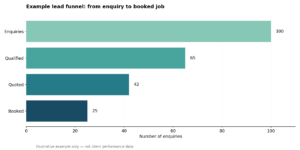
This guide explains how Irish businesses can attract qualified enquiries, turn more of those enquiries into booked jobs and measure which marketing activities contribute to revenue.

What Is Lead Generation for Local Businesses?
Lead generation is the process of attracting potential customers and encouraging them to express interest in your products or services.
For a local service business, a lead might be:
- A customer calling to request a roofing quotation.
- A homeowner submitting a plumbing enquiry through your website.
- Someone contacting your business through WhatsApp or Facebook.
- A potential customer requesting an appointment.
- A visitor completing an online booking form.
However, not every enquiry represents a genuine sales opportunity.
A customer looking for a service outside your coverage area may not be a qualified lead. Similarly, someone requesting a service you do not provide is unlikely to become a customer.
The goal is therefore not simply to generate more enquiries. It is to attract relevant enquiries from people who are likely to need your services.
Why Lead Quality Matters More Than Traffic
Imagine two landscaping companies operating in Ireland.
Company A receives 1,000 website visits and generates 15 enquiries.
Company B receives 400 website visits and generates 25 enquiries.
Although Company A attracts more traffic, Company B converts a higher proportion of visitors into potential customers.
The difference may come from better targeting, stronger service pages, clearer calls to action or more relevant search traffic.
This is why local businesses should monitor enquiries and booked jobs alongside website traffic.
Understanding the Local Customer Journey
Irish customers often research businesses through several channels before making contact.
A homeowner might discover a company through Google Search, examine its Google Business Profile, read customer reviews and visit its website before requesting a quotation.
Each interaction influences their confidence.
A business with accurate contact information, clear service descriptions, genuine project photos and recent customer feedback can make that decision easier.
The challenge is ensuring these different touchpoints support one another.
Where Irish Customers Search for Local Services
Ireland has a highly connected digital population.
According to DataReportal’s Digital 2026 Ireland report, Ireland had approximately 5.26 million internet users and 4.26 million social media user identities in late 2025.
These figures highlight the importance of digital visibility, although social media identities should not be interpreted as unique individuals.
For local businesses, three discovery channels deserve particular attention.
1. Google Search
Google Search helps businesses reach customers who are actively looking for a service.
Examples include:
- Emergency plumber Dublin
- Roofing contractor Kilkenny
- Garden maintenance Kerry
- Junk removal near me
- Commercial cleaning Limerick
These searches can indicate strong commercial intent because the customer is already looking for a solution.
2. Google Maps
Google Maps allows potential customers to compare nearby businesses, read reviews, examine service information and make contact.
For many trades and service businesses, a well-maintained Google Business Profile is an important source of enquiries.
3. Facebook and Instagram
Social media is particularly useful for businesses whose work can be demonstrated visually.
Landscapers, flooring installers, painters, cleaning companies and home improvement providers can use project photos and videos to build familiarity and trust.
The Central Statistics Office’s Information Society Statistics – Enterprises 2025 reported that 74.2% of enterprises in its survey used social media.
The survey covers enterprises with at least ten people employed, so its findings should not be assumed to represent every small Irish business.
Nevertheless, it demonstrates the importance of online channels in the wider Irish business environment.
Build a Lead-Generating Website Before Investing in Advertising
Driving visitors to a poorly designed website can waste valuable marketing budget.
Before investing heavily in SEO or advertising, make sure your website clearly explains what you offer and makes it easy for potential customers to contact you.
Create Clear Service Pages
Each important service should have a dedicated page explaining:
- What the service includes.
- Which locations you cover.
- Who the service is suitable for.
- What customers can expect.
- Which factors influence pricing.
- How to request a quotation.
For example, a roofing company offering roof repairs, gutter replacement and chimney repairs should consider dedicated pages for those services rather than placing everything on one general page.
Each page should address the specific questions a potential customer might have.
Use Clear Calls to Action
Visitors should understand what to do next without searching around the website.
Effective calls to action include:
Request a Free Quote
Call Our Team
Book a Consultation
Check Availability
Place your primary call to action near the beginning of the page and repeat it naturally where customers may be ready to enquire.
Our guide to website lead generation tips explains how website structure, trust signals and conversion-focused design can support more enquiries.
Improve Mobile Usability
Many customers search for local services on their phones.
Your website should therefore offer:
- Fast-loading pages.
- Readable text.
- Easy-to-use navigation.
- Clickable phone numbers.
- Simple enquiry forms.
- Buttons that are comfortable to tap.
Professional web development services should consider these elements alongside visual design.
Even small improvements can make a difference. Our article on conversion rate optimisation explores ways to improve website conversions without necessarily increasing traffic.
Track the Enquiries Your Website Generates
A website should do more than display information.
It should help you understand where enquiries originate and what happens after someone contacts your business.
Consider tracking:
- Phone enquiries.
- Contact form submissions.
- Appointment bookings.
- Qualified leads.
- Quotations issued.
- Jobs booked.
- Revenue associated with completed jobs.
Google Analytics 4, Google Tag Manager and appropriately configured advertising conversion tracking can help connect marketing activity with customer actions.
Call tracking may also be useful when implemented transparently and in accordance with applicable privacy requirements.
Local SEO: Building Long-Term Visibility in Ireland
Local search engine optimisation helps businesses improve their visibility for searches related to their services and geographic areas.
Unlike paid advertising, organic search visibility does not require payment for each click. However, SEO requires ongoing work, and rankings are never guaranteed.
A well-planned local SEO strategy can help businesses reach customers searching for relevant services.
Optimise Your Google Business Profile
Your Google Business Profile should accurately represent your business.
Important elements include:
- Correct primary and secondary business categories.
- Accurate opening hours.
- Relevant services.
- Appropriate service areas.
- Genuine business and project photographs.
- Updated contact information.
- Customer reviews.
Keep the profile accurate and useful rather than publishing updates solely in the hope of improving rankings.
If you are setting up a profile, our Google Business Profile setup guide for Ireland explains the process.
Build Relevant Local Service Pages
A business operating in several towns may benefit from dedicated location pages when those pages offer genuinely useful local information.
For example, a landscaping company serving Tralee, Killarney and Listowel might explain its services and relevant local work in each area.
However, copying the same content and replacing town names is not a sustainable strategy.
Useful location pages should reflect genuine service coverage and provide distinctive information for local customers.
Maintain Accurate Business Citations
Business citations are references to your business information on relevant directories and websites.
Consistent business details help customers identify and contact the correct company.
For businesses with a public premises, this may include the business name, address and phone number.
Service-area businesses should follow Google Business Profile guidelines and avoid publishing private residential addresses unnecessarily.
Learn more in our guide to local citations in Ireland.
How Long Does Local SEO Take?
SEO results depend on factors such as competition, website quality, existing visibility and the work required.
Some businesses may see early improvements within a few months, while competitive services and locations can require longer.
Our guide explaining how long SEO takes provides further context.
Customer Reviews: Building Trust Before the First Enquiry
Customer reviews can strongly influence how potential customers evaluate local businesses.
Before contacting a roofer, electrician or cleaning company, many customers want reassurance that the provider is reliable.
BrightLocal’s Local Consumer Review Survey provides useful research into online review behaviour, although its US-based findings should not be treated as Ireland-specific statistics.
For Irish businesses, the practical priority is collecting genuine feedback and responding professionally.
Ask Customers for Reviews
A good opportunity to request a review is after completing a job and confirming that the customer has received the agreed service.
You can provide a direct link to your Google review page by email or an appropriate customer message.
Keep requests neutral. Do not offer incentives in exchange for positive Google reviews or selectively request reviews only from customers expected to leave favourable feedback.
Respond to Customer Feedback
Respond professionally to both positive and negative reviews.
Thank satisfied customers for their feedback, and address complaints calmly without revealing private customer information.
For further guidance, read why Google reviews are important.
Google Ads and Meta Ads for Faster Lead Generation
Local SEO supports longer-term visibility, but some businesses need enquiries while their organic presence develops.
Paid advertising can help reach potential customers more quickly, provided campaigns are properly targeted and measured.
Google Ads for High-Intent Enquiries
Google Search Ads allow businesses to advertise when potential customers search for relevant services.
For example, a plumbing company might target searches relating to emergency plumbing repairs within its service area.
Important campaign considerations include:
- Relevant search keywords.
- Appropriate geographic targeting.
- Negative keywords.
- Clear advertisement messaging.
- Relevant landing pages.
- Accurate conversion tracking.
- Regular search term reviews.
A professional Google Ads management strategy should focus on qualified enquiries and business outcomes rather than clicks alone.
Facebook and Instagram Advertising
Meta advertising can be useful for services that benefit from visual demonstrations, seasonal promotions or local brand awareness.
A landscaping company might promote a completed garden transformation, while a flooring installer could showcase recent projects.
Effective campaigns typically combine:
- Authentic photographs or videos.
- A clearly defined target audience.
- A relevant offer.
- A simple enquiry process.
- Timely follow-up.
Lead forms can reduce the effort required to submit an enquiry, but businesses should monitor lead quality.
Our Facebook Ads services focus on connecting campaign targeting with practical lead generation goals.
For a comparison of both channels, read Google Ads vs Facebook Ads in Ireland.
Measure More Than Cost Per Lead
A lower cost per lead does not automatically mean a campaign is more profitable.
Consider this hypothetical example:
| Metric | Campaign A | Campaign B |
|---|---|---|
| Advertising spend | €500 | €500 |
| Enquiries | 40 | 20 |
| Cost per enquiry | €12.50 | €25 |
| Booked jobs | 4 | 8 |
| Cost per booked job | €125 | €62.50 |
Although Campaign A produces cheaper enquiries, Campaign B generates twice as many booked jobs from the same advertising spend.
These figures are illustrative, not actual campaign results.
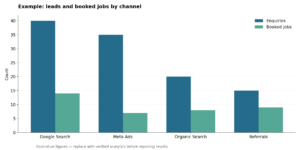
This is why businesses should measure cost per qualified lead, cost per booked job and revenue generated.
Speed to Lead: Why Responding Quickly Matters
Generating enquiries is only valuable when someone follows them up.
Customers looking for urgent services may contact several businesses within a short period.
If one company responds promptly while another waits until the following day, the faster business may have a better opportunity to secure the booking.
Reduce Missed Calls
Tradespeople cannot always answer calls while working on site.
However, businesses can establish processes to ensure missed enquiries receive attention.
Practical options include:
- A clear voicemail message.
- Missed-call notifications.
- A designated callback person.
- A shared enquiry inbox.
- Appropriate automated acknowledgements.
Establish a Response Standard
Decide how quickly your business aims to respond during working hours.
For example, you might aim to return missed calls within 15 minutes and review new website enquiries within 10 minutes.
These are operational targets rather than guaranteed conversion benchmarks.
Monitor actual response times and adjust your processes based on customer needs and team capacity.
CRM and Automation: Turning More Enquiries into Booked Jobs
As enquiry volumes grow, managing customer communication across phone calls, emails, website forms and social media becomes increasingly difficult.
Without a structured process, potential customers can be overlooked, quotations may go unanswered and follow-up opportunities can disappear.
A customer relationship management system, commonly known as a CRM, helps businesses organise enquiries and track each opportunity through the sales process.
For local service providers, CRM systems can connect marketing activity with practical customer management.
For example, Irish marketing providers such as Simple Marketing Business Development combine paid advertising services with CRM setup, automated follow-ups, appointment reminders and customer communication tools. Connecting these activities can help businesses manage incoming enquiries more consistently, rather than treating advertising and customer follow-up as separate tasks.
The important principle is straightforward: generating an enquiry should trigger a clear process for handling it.
What an Effective Lead Follow-Up Process Looks Like
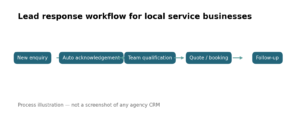
A practical lead management workflow might include five stages.
1. Capture the enquiry
Collect website forms, incoming messages and call records in a central system.
2. Acknowledge the customer
Confirm that the enquiry has been received and explain when someone will respond.
3. Qualify the opportunity
Identify the required service, location, urgency and other information needed to assess the request.
4. Follow up appropriately
Send relevant quotation updates or reminders where appropriate, respecting communication preferences and applicable legal requirements.
5. Record the outcome
Track whether the enquiry resulted in a quotation, appointment, completed job or lost opportunity.
This process helps businesses understand where leads are progressing and where improvements may be needed.
Appointment Reminders and Customer Communication
For businesses that arrange surveys, consultations or scheduled work, appointment reminders can help customers remember agreed bookings.
A simple confirmation might include the appointment date, expected arrival window and a contact number.
After completing a job, businesses can request genuine feedback and maintain appropriate customer records for future service needs.
Automated communication should remain useful and relevant.
Businesses must also distinguish transactional service messages from direct marketing and comply with applicable GDPR and Irish electronic marketing requirements, including consent and opt-out rules where required.
Lead Generation Strategies for Different Irish Industries
Although the core principles are similar, different industries require different approaches.
Roofing and Exterior Property Services
Roofing customers often search when they have a specific problem, such as a leak, storm damage or deteriorating roof materials.
Useful strategies include:
- Service-specific local SEO.
- Google Search Ads for relevant enquiries.
- Genuine project photographs.
- Clear emergency contact information.
- Fast quotation follow-up.
For a more targeted example, see our guide to digital marketing for roofing companies in Kilkenny.
Landscaping and Garden Maintenance
Landscaping customers often compare previous projects before contacting a provider.
Businesses can benefit from:
- Before-and-after project photographs.
- Local service pages.
- Google Business Profile optimisation.
- Seasonal advertising.
- Customer reviews.
- Simple quotation forms.
Cleaning Companies
Residential and commercial cleaning businesses should clearly explain the services they provide, their coverage areas and how customers can request a quotation.
For commercial cleaning, decision-makers may also want information about insurance, scheduling and service standards.
Junk Removal and Property Clearance
Convenience and availability can be especially important for junk removal customers.
Clear service information, straightforward quotation requests and prompt responses can help customers make decisions.
Home Improvement and Flooring
Visual proof plays a particularly important role in home improvement.
High-quality photographs, project descriptions and clear information about materials can help customers understand what to expect.
A Practical 90-Day Lead Generation Plan
Improving lead generation does not require launching every marketing channel simultaneously.
A structured 90-day plan can help businesses prioritise the work that matters.
Days 1–30: Improve the Foundation
Start by reviewing your existing online presence.
Focus on:
- Auditing your website and main service pages.
- Updating your Google Business Profile.
- Checking business information across relevant listings.
- Improving primary calls to action.
- Setting up enquiry and conversion tracking.
- Reviewing existing customer feedback.
- Establishing a lead response process.
At the end of the first month, you should have a clearer understanding of how customers currently find and contact your business.
Days 31–60: Improve Visibility and Enquiry Handling
Once the foundation is in place, begin improving the channels most relevant to your services.
Priorities may include:
- Publishing useful service content.
- Improving existing local landing pages.
- Launching one focused advertising campaign.
- Collecting genuine customer reviews.
- Reviewing enquiry quality.
- Improving response times.
- Organising leads within a CRM or shared tracking system.
Avoid spreading your budget across too many channels before understanding which ones generate valuable opportunities.
Days 61–90: Measure and Optimise
Use the data collected during the first two months to guide your next decisions.
Review:
- Total enquiries.
- Qualified enquiries.
- Booked appointments.
- Completed jobs.
- Advertising costs.
- Cost per booked job.
- Revenue attributed to marketing.
- Average response time.
Identify where customers are dropping out of the process.
For example, if enquiries are increasing but bookings remain low, investigate lead quality, pricing, quotation follow-up and response times before increasing advertising spend.
Common Lead Generation Mistakes Irish Businesses Should Avoid
Even businesses with strong services can lose opportunities through preventable marketing and operational problems.
Focusing Only on Website Traffic
Traffic is useful, but it does not automatically translate into customers.
Measure the enquiries and business outcomes generated by that traffic.
Sending Every Advertisement to the Homepage
A customer searching for emergency roof repairs should ideally reach a relevant page explaining that service.
Sending everyone to a general homepage can create unnecessary friction.
Ignoring Missed Enquiries
Missed calls and unanswered messages can represent lost opportunities.
Create a reliable process for reviewing and responding to them.
Targeting Too Many Locations
Businesses sometimes target towns they cannot realistically serve.
Focus on genuine service coverage and locations where you can provide reliable customer support.
Publishing Duplicate Location Pages
Changing only the town name across multiple pages rarely creates meaningful value.
Build distinctive content based on actual services, local experience and customer needs.
Measuring Leads Without Tracking Bookings
A campaign producing many enquiries may still perform poorly if few customers book.
Evaluate marketing against qualified leads, booked work and commercial results.
Our guide to common SEO mistakes in Ireland explores additional issues that can affect local search performance.
How Digiwizard Helps Local Businesses in Ireland Generate Leads
At Digiwizard, we focus on helping businesses improve their online visibility and connect with potential customers through practical digital marketing strategies.
Our approach combines search visibility, advertising, website performance and conversion optimisation.
Depending on your business goals, this may include:
- Local SEO and Google Business Profile optimisation.
- Google Ads campaign management.
- Facebook and Instagram advertising.
- Conversion-focused website improvements.
- Local content strategy.
- Lead generation tracking and reporting.
Rather than focusing only on impressions or clicks, we encourage businesses to evaluate the quality of their enquiries and the commercial results generated by their marketing.
Every business operates in a different market, so the right strategy depends on competition, customer demand, service value and available resources.
Conclusion: Build a Lead Generation System That Supports Business Growth
Successful lead generation for local businesses in Ireland is not about relying on one marketing tactic.
It requires a connected approach that helps potential customers discover your business, understand your services, trust your reputation and contact you easily.
Local SEO can improve long-term visibility. Google Ads and Meta Ads can support targeted customer acquisition. A conversion-focused website can make enquiries easier, while effective follow-up helps prevent opportunities from being overlooked.
Start by understanding where your current enquiries originate and what happens after they arrive.
Then improve one part of the process at a time.
The goal is not simply to generate more leads. It is to build a reliable system that turns relevant enquiries into valuable customer relationships.
Frequently Asked Questions
How can local businesses in Ireland generate more leads?
Local businesses can generate more leads by improving their Google Business Profile, investing in relevant local SEO, creating useful service pages, collecting genuine customer reviews and running targeted advertising campaigns. Prompt follow-up and accurate conversion tracking are also important.
Is Google Ads or local SEO better for lead generation?
Google Ads can generate visibility quickly, while local SEO supports longer-term organic search visibility. The best approach depends on your industry, competition, budget and customer acquisition goals.
How much should a small business spend on lead generation in Ireland?
There is no universal budget. Businesses should consider their profit margins, average job value, competition and capacity to handle enquiries. Start with a manageable budget, measure qualified leads and booked jobs, and adjust spending based on results.
How long does local SEO take to generate leads?
Results vary depending on the website, competition and search demand. Some businesses may notice early improvements within a few months, while more competitive markets can take longer. Rankings and lead volumes are not guaranteed.
Why is CRM important for local business lead generation?
A CRM helps businesses organise customer enquiries, manage follow-ups, track quotations and monitor bookings. It can reduce missed opportunities and provide a clearer picture of how enquiries progress through the sales process.
What is the most important lead generation metric?
Cost per booked job is a useful metric for many service businesses. However, businesses should also consider qualified lead volume, conversion rates, average job value, customer acquisition cost and profitability.
Can Facebook Ads generate leads for local service businesses?
Yes. Facebook and Instagram advertising can be effective for services that benefit from visual demonstrations, seasonal offers or local awareness. Results depend on targeting, creative quality, offer relevance and lead follow-up.
Ready to Improve Your Local Business Lead Generation?
If your website receives traffic but generates too few enquiries, or your advertising campaigns are not producing the results you expect, it may be time to review your overall lead generation process.
At Digiwizard, we can help you identify opportunities to improve local search visibility, advertising performance and website conversions.
Book a Free Consultation with Digiwizard to discuss your business goals and explore practical next steps.